Close


 SearchMenu
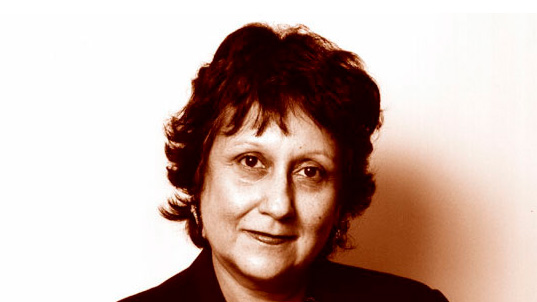
Yasmin Alibhai-Brown, 8 September 2013
‘How you are in a different language… personality, your values, everything changes’, says Yasmin Alibhai-Brown.
An eloquent storyteller and unrelenting critic of the human consequences of failed democracies, Yasmin switches codes between fiction, journalism, broadcasting, theatre, and the culturally transformative power of food. Listen to Yasmin talk about the politics of storytelling here…
Following a 3-day Learning Lab facilitated by Yasmin Alibhai-Brown, Yasmin was interviewed by Susan McKay, journalist and creative writer. This public interview took place at the Chester Beatty Library, Dublin Castle, 2010
Yasmin Alibhai-Brown is a journalist who has written for ‘The Guardian’, ‘The Observer’, ‘The New York Times’, ‘Time Magazine’, ‘Newsweek’, and ‘The Mail’. A regular columnist for The Independent and London’s ‘Evening Standard’, she is also a radio and television broadcaster and author of several books, including The Colour of Love (1992); No Place Like Home (1995); True Colours (1999); Who do we think we are? (2001); After Multiculturalism (2000), and The Settlers Cookbook: A Memoir of Love, Migration and Food (2008).

Handel Wright, 8 September 2013
The difference between teaching and critical pedagogy is vital to Handel Kashope Wright: ‘Critical pedagogy brings to the floor issues of social identity’ revealing where power resides and inequalities are preserved.
‘Multiculturalism’, ‘anti-racism’… terms often used without their cultural and historical meaning. Listen to Handel talk about how different politics, peoples, places intersect…
Following a 3-day Learning Lab, facilitated by Handel Wright, Handel was interviewed by Mica Nava (Professor in Cultural Studies, University of East London (UEL)). This public interview took place at the Chester Beatty Library, Dublin Castle, 2010.
Handel Kashope Wright is Director of the Centre for Culture, Identity and Education at the University of British Columbia, Vancouver. He is co-editor of the book series African and Diasporic Cultural Studies, associate editor of Critical Arts and serves on the editorial board of the International Journal of Cultural Studies; the European Journal of Cultural Studies; Topia; the Canadian Journal of Education and Postcolonial Studies in Education. He has published extensively on continental African cultural studies, cultural studies of education, critical multiculturalism, and anti-racist education.
Image credit: Veronica Vierin
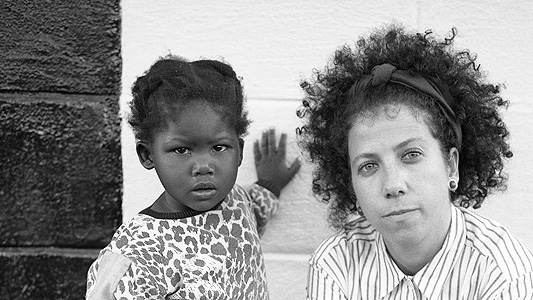
Andrea Durbach, 8 September 2013
We were initially drawn to Andrea Durbach’s beautifully crafted memoir Uppington - a story of personal and political transformation.
She believes the law can be used ‘to hold people accountable, to give visibility to things that were otherwise invisible…’ Mitzi Goldman’s recent documentary A Common Purpose is a moving chronicle of Andrea’s unwavering commitment to navigating social justice through the language of human rights and the law. Andrea talks about some of these issues here…
Following a 3-day Learning Lab, facilitated by Andrea Durbach, Andrea was interviewed by Mary Fitzgerald (Irish Times’ Foreign Affairs Correspondent). This public interview took place at the Public Interest Law Conference (PILA) in Dublin, 2010.
Andrea Durbach is the Director of the Australian Human Rights Centre and Professor of Law at University of New South Wales (UNSW). Born and educated in South Africa, she practiced as a political trial lawyer and human rights advocate, representing victims and opponents of apartheid laws. Her areas of expertise include: access to justice, legal ethics and public interest litigation; and the implementation of economic, social and cultural rights. Her memoir Upington (1999), published by Allen & Unwin in 1999 was recently adapted by Mitzi Goldman into the documentary film A Common Purpose (2011).
Image credit: A Common Purpose