Close


 SearchMenu
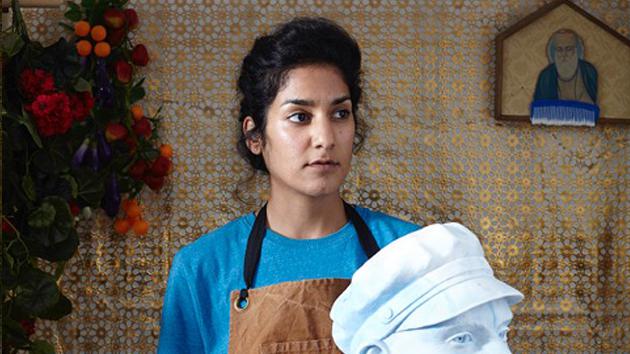
Jasleen Kaur, 23 February 2016
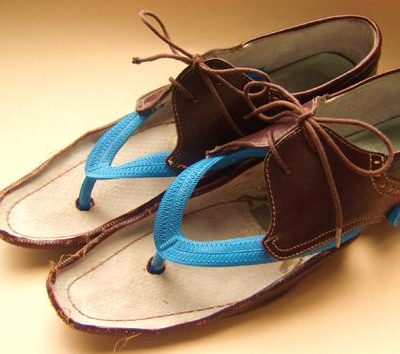
British Council's 'Voices' speak to a bodging practitioner. Jasleen Kaur was one of six artists chosen by Counterpoints Arts to exhibit in their collaboration with the Ben Uri Gallery for the Unexpected: Continuing Narratives on Identity and Migration exhibition of 2016.
Here she speaks about her work with everyday objects, reframing their relevance and meaning in cultural traditions and human behaviour. This approach has drawn on her self-described ‘multiple identities’, from Glaswegian to British-Indian to British-Asian to Punjabi, which, she says ‘provide me with a richness that I often draw upon in my work.’
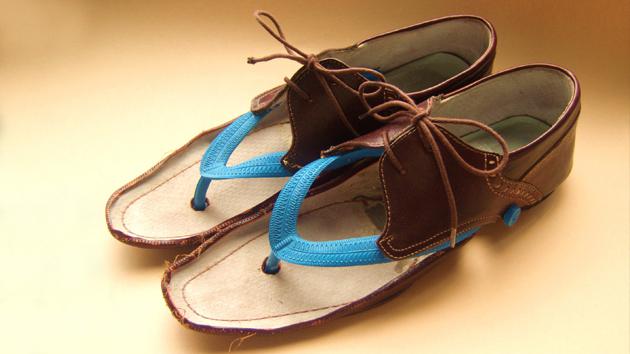
In this interview with the British Council which coincided with the Migration Lab held at the Design Museum in collaboration with Counterpoints Arts, Jasleen describes how she began using ‘found objects’ in her work, later dismantling and reforming hybrid objects. Through ‘bodging’ she not only repurposes but also subverts and reimagines their meaning in people’s understanding. When asked about the relationship between migrants and material possessions, Jasleen says ‘It’s a façade that what you carry with you, or what you wear, say who you are. Your possessions don’t necessarily match what’s going on in your body or mind. It’s much more complex than that.’
Linking in with the Make Do & Mend movement popular in the arts, her ‘bodging’ workshop at the Migration Lab in the Design Museum with Counterpoints Arts delighted and challenged participants to become ‘bodgers’ themselves and explore, through objects that we carry with us, the themes of identity and loss .
Our thanks to Jasleen, Charlotte Ogilvie and the British Council.
Image credit: Jasleen Kaur 'My dad's a proper businessman who dresses ‘improperly’ and I wanted to reflect this in something as basic as a shoe.'
Yasmin Fedda, 10 November 2015
Syria is still deep in an active conflict, and its people still need outlets to share their experiences.
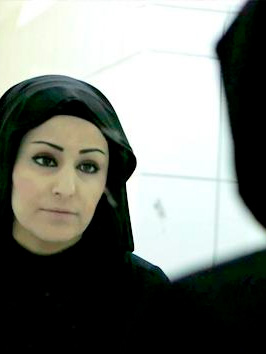
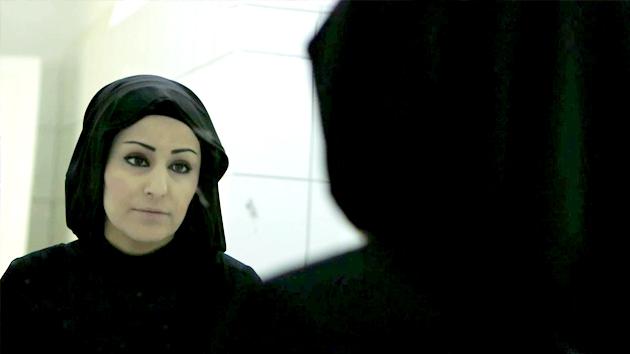
Director Yasmin Fedda spoke to the British Council about her film Queens of Syria, a documentary following the adaptation of the Euripides tragedy The Trojan Women. Filmed in 2013, Fedda followed 50 female refugees living in exile in Amman, Jordan coming together daily to work with the ancient text and in the process ‘drawing parallels with their own lives’.
The importance of such a project? According to Yasmin, this platform was ideally placed to begin the healing process, empowering a group of Syrian woman to redefine how the world sees them. Film is so accessible as an art-form and a documenting device in contexts such as this, according to the London-based director/storyteller. ‘Storytelling and creativity in a time of conflict may seem like a frivolity, but they couldn’t be more important. They make us think.’
Syria on the Road: Stories of Conflict, Migration and Place (Learning Lab, Leicester, November 2015) with Counterpoints Arts discussed the changing nature of screen storytelling and Yasmin and participants at the workshops addressed questions such as: What kind of storytelling matters? What equipment matters? What different form or process does it take to make these films; Are they reactions to a situation or the emergence of a new aesthetic?
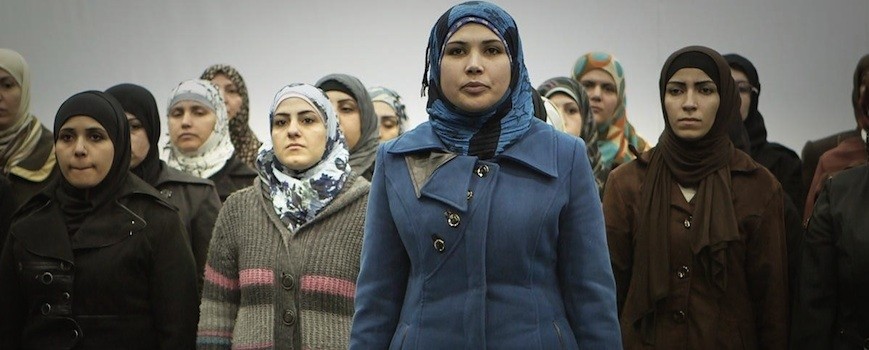
Suad, a young Syrian woman who fled her homeland for Jordan during filming of the documentary puts it perfectly: ‘I have a scream I have to let out – I want the world to hear it’, Giving voice to these women was how the project started yet Fedda notes how she was embraced by the group who opened up and shared their stories with her.
Our thanks to Charlotte Ogilvie and The British Council.
Saba Al Mobaslat, 6 September 2015
Interview conducted for Out of Place Learning Lab: ‘Creative Responsibility and Human Rights: Telling the Untold Stories of the Crisis in the Mediterranean’ at Counterpoints Arts’ ‘dis/placed’ Exhibition, The Ditch Shoreditch Townhall, London
Learning Labs form part of the Out of Place Action-Research Platform (a project led by Counterpoints Arts’ Learning Lab, in partnership with Royal Holloway, University of London and FilmAid).
Gillian Gordon (RHUL/FilmAid) and Áine O’Brien (Counterpoints Arts)
Transcribed by: Eloise Maland
Just one day before World Refugee Day 2015, the numbers of displaced people are approximated at almost 60 million people. This is both overwhelming and unprecedented.
Saba: Yes, it is, and no one can tell what is going to happen overnight, because the fighters and the fighting are quite mobile and the situation in Syria is extremely fluid. For instance, early yesterday morning there was very intense fighting in Quneitra, which is at the border with the Golan Heights. More displacement, a lot of uncertainty and I fear for the stories that are not being told. We know what we know, but there is a lot more that I think the world doesn’t know about. And I am a bit disappointed to say that sometimes I feel the world does not want to know what is happening, because then they will have to hold themselves responsible, morally. And it is a decision to be ill informed so that you have less pressure to do more.
One could arguably compare the current level of displacement to World War II, where people initially turned away – turned a blind eye – from acknowledging or overtly recognizing what was happening.
Saba: You know I think with all the technology, all of the civilisation we claim, we are not able to deal with things in a more assertive way. If you look at the discussions these days on the media, it is all about migrants going to Europe, as if this is the problem. The problem is not about migrants going to Europe. To put your life and the life of those you love on a boat, with zero certainty that you will make it to a shore, means that you are running from something much worse. And this is the moral question I think that we, as citizens of the world, have to say that we take responsibility (and we want an answer), and that we demand clarity from our governments, our politicians, those who fund all different parties. Because I don’t think this war is continuing without some organised funding mechanism. There has to be a broader debate, led by a mass of people who consider themselves responsible for humanity. Forget about politics and politicians, this is shameful. To be part of a world that cares less about the life of people, this is the shame.
I feel ashamed by not being able to answer simple questions I get asked by my own sons, like ‘Mum, why is Europe talking about migrants being their ultimate problem’? So why, then, aren’t we all contributing to broader discussions so we can solve the actual problem – the unjustifiable level of violence in this region?’ And I am really wordless. After four years of assuming that we are doing what we can to save people’s lives, I have my own questions on a personal level, not just on an organisational level. Like: how good our job is, and are we really saving lives? And if we are saving lives, are we promising people a better life, and where would that be? How much more can be done to reach the point where people can be whom they choose to be? To be caught in a war that is not of your choice, and for you to pay a price that is beyond your capacity, is just so unfair.
How do you see it affecting the younger generation, being born into it but also being pulled into the middle of the conflict very dramatically and so recently? What are the conditions for families and children when they actually arrive in the camps?
Saba: That actually should be the ultimate concern of the entire world. It is not about migrants escaping to Europe, it is about how this part of the world we are in, basically the Middle East, is going to perceive the rest of the world when we have a generation after another growing into violence. When violence is the only language through which they can debate things and change their reality. What impact does that have on the global citizenship or on us as human beings? When you feel left alone to fight a fight that is so unjust and so unfair, and you are left to either live or die, you become by nature very angry. And that anger gives you enough reason to want to fight against the entire world. And then you start classifying and categorising the world into those who are with you and those who are against you. And you accept being violent with those who you assume are against you.
That is our real fight. Our real fight is not the political military fight in Syria, or even in Yemen or Libya. It is about a generation after generation growing so used to violence; seeing it in the news, playing it on play station, seeing it outside their little house, or whatever remains of their little house. Then expecting them to act in a civilised way and engage in a dialogue to reach a peaceful solution?
We are people of our own environment. If that is my surrounding, how do you expect me to grow and be acceptable to others – accepting others, being neutral, civilised and engaging in discussion? That is the concern. As an Arab Muslim woman, my concern is that there will be a time where we as human beings will not find a common ground that can hold us together against conflicts which lack in fairness or are unjust. We will find enough reason to continue to fight against each other. And that is a vicious cycle that will not be broken anytime soon. Unless we look at the broader, bigger root causes. It is no longer about the military action. It is no longer about a regime we had here or an opposition there. It is about engaging as human beings, creating common ground, deciding how to re-engage on a very human level in a discussion that might lead to positive change in our lives across the globe.
This is no longer a problem related to a particular religion or race or region; this is global. And that is what I fear about. We have a generation who is now being lost. We have a generation of frustrated, angry, hopeless youth and children. And I fear that when their anger is channelled in any particular direction, it will be extremely disruptive to any attempt at peace or human-to-human dialogue.
Is there any possibility of intervening? How would you do that? Obviously Save the Children is working with young people all the time, what are some of the things that you are thinking about in terms of interventions?
Saba: We do have a lot of initiatives, and we are trying our best. But at the end of the day, Save the Children is one organisation, and that is a drop in the ocean. There has to be a broader decision made to institutionalise some of the initiatives we are trying to introduce to young people. One of the very promising, at that time, initiatives was the ‘No Lost Generation’ where organisations from the UK, the US, Canada, Europe came together and decided that we are not going to allow the world to lose a generation and we are going to invest in putting an end to lack of access to quality education, investing in peace making, investing in the basic life skills. But the room for this space is shrinking, because I can be talking about all these things, but in the absence of any certainty about food aid finding its way to hungry people, access to drinkable water, I wouldn’t even dare to say to clean water, how are you going to engage in a discussion around peace? Human beings needs are all equal. I cannot have the luxury of creating a space where I can talk about the higher, moral, ethical debate when the very basics are not met.
I tell you from where I stand, as a Country Director for Save the Children’s operations in Jordan, I do know that by the end of July I will have to stop my World Food Programme Implementation because we are running out of funds. When I am faced with 600,000 hungry people, how am I going to bring them together to a child or youth friendly space and talk about peace? We need to connect to interim solutions, be it access to food, access to shelter, a dignified living, for god’s sake, before we talk about peace. Otherwise that won’t sell high and that is my biggest fear.
Unfortunately there are those who may not be interested in talking about peace, but do have enough money to provide services to people: food, water, shelter. When you provide the basics to a hungry, homeless person, you can then dictate your agenda. And that is also my fear. Our fight is very vicious and not balanced, and when I say our fight, I say the fight for a future versus the fight that we are stuck in.
So through you, through this platform, this is a call to the world. If we want a better world we have to stand up and say we are all equally committed to bringing the violence to an end. And that will not happen only by a soft intervention talking about peace making and reconciliation. This has to respond to people’s basic needs and then take a step forward in the right direction.
When people go on these dangerous journeys, can you describe what happens when they get to a refugee camp, or what is the next step? And the type of work Save the Children is doing to help them create temporary lives in the camps?
Saba: I can talk from my professional experience here in Jordan. Once you are in a camp, you are in a camp. And then you have to come up with a routine that makes you remain sane, feel productive and have a sense of time. Because as human beings we do need that sense of routine; wake up, go to work, do the groceries, go to school. You need some sense of structure. And looking at refugees here – I won’t make you cry over a sad story of a refugee – they are extremely resilient. It takes them a couple of weeks or sometimes a month or two to pull their act together, but eventually they do understand that their resilience is the only way for survival. So they come up with their routine. It may make sense, it may not make sense, but to them it’s the only way to remain sane and to feel that ‘I am alive’. But refugee camps all around the world are fenced, and if you are to live in a fenced fancy area, I wouldn’t say a desert in the middle of nowhere, you would lose a sense of place and a sense of time. So that is my concern. You can make a temporary life in a camp. But that is not a life. And that is the concerning bit.
If you want me to describe Za’atari, there are no colours in Za’atari. I always say I love it when children walk into our Save the Children child friendly spaces or kindergartens because there are colours. We have over a thousand children who were born in Za’atari camp. Their only exposure to the full spectrum of the rainbow colours is a box of crayons in a kindergarten. I am not trying to sound emotional or sentimental, but I want you to understand that when we, in ten or fifteen years time, question why did we have a generation of tough, rough, brutal human beings, that will be my question. They were not exposed to life or colours at the right time. Therefore they had to survive and it is a tough environment, so they grew up tough. And they grew up feeling that they were left to fight a fight of no choice, alone. And now they will seek revenge, and that is concerning, very concerning.
We do a lot of interventions in the camp to explain what it means to communicate in a civilised way. We have bloggers; we have photojournalists trying to keep their life connected to the other world because unfortunately the other world can’t stay in touch with them. But there is a limit as to how many pictures you can upload from a camp, and you can sense the repetition, and they say they can’t find anything new to share with the world. That is the beginning of hopelessness. And that is what we should all stand up and fight against. If we allow a generation to grow up hopeless then I am not sure what future will be waiting for all of us.
One of the things that we as arts and culture practitioners are talking about is how can the arts engage and make a difference; how can we mediate in some way? Of course realising we can’t do things like help with the practical matters of water or electricity nor do anything medically. But storytelling can sometimes be a powerful tool.
Saba: I can share with you very interesting social media stuff we have been doing with children in the camps and you might find it useful. This isn’t Save the Children trying to dictate what we want the displaced children to tell the world. This is a space that was created for them and now fully owned by them. They take pictures of their daily lives; they connect with other children elsewhere around the world and they blog. And that is to us the simplest form of art. Some of them do draw, and I can share with you brilliant pictures about early marriage, the reflection of girls on early marriage. But we found that a disposable camera in the hands of a child, going around, can allow them to capture the world through their own eyes. And what is really amazing is the fluctuation that you see in their reflection, or what they choose to capture in a weeks period. So sometimes it is the dirt and the lack of water and the despair. Sometimes it is a football match between little kids playing and just having fun. And when you think about it and forget about the context and the fences and the camp, they are just like all of us. They go through turmoil of emotions.
Unfortunately for children particularly and young people, adolescents, trapped in a camp, the overall ‘feeling’ spectrum happens to be extreme. So they don’t have the ability to come to terms with the emotional waves they could be going through. They could be happy and laughing now and then suddenly they start swearing and kicking and hitting. And that is a very natural, psychological reaction to the situation they are in. And that is what we fear. As sane, normal people you can read my facial and physical expression and tell when I am about to get angry. If you are in despair, you tend to flip moods without any triggers, and that is extremely concerning. So this is the art I would want people to see, not the art we choose to use as an expression of the situation, but the pictures, the photos children choose to capture to share with the world. And surprisingly enough, some of them say we hide the worst of our lives because we don’t want people to feel sorry for us.
There was a very interesting interaction between a group of people who came from the UK to visit our spaces in Za’atari camp and a group of children. One of the girls stood up towards the very end of the discussion and said ‘ Why are you here?’ And a gentleman from the delegation said ‘We are here because we would love to get to know you and we are here because we want to tell the world your stories.’ And she said ‘I don’t want your pity because I am tough and strong.’ She is thirteen years old. He is sixty-nine. She stood up, taller than him, looked him in the eye and said ‘Do not pity me.’ This is the beauty of resilience, but how strong can you be, how resilient can you be when you are being broken every minute. You reach a point where you are shred into thousands of pieces, and you recollect yourself and make a full human being out of yourself. It becomes really tough and difficult.
So, yes, I can tell stories about resilience. I mean the fact that they still do wake up every morning and go and collect their bread means that they insist on continuing to be alive. That is resilience. They are definitely resilient. They are very tough, very strong; they insist on staying alive, for their children, for whatever hopes they have for the future.
How can these stories be distributed so they are meaningful to audiences, so that there can be action in terms of things changing on the ground.
Saba: Share the link. It is simple. It has been online for quite some time; we have a thousand likes. I want these children to know that someone somewhere cares enough to click on this thing and just see what they are uploading. Engage with them, comment on whatever they post. They do really need to feel they are part of a bigger world. One thing we are keen on is not for them to feel that they are left alone. And this is not about UN resolutions; this is not about governments; this is not about politicians. This is about a human-to-human connection. This is about a mother sitting somewhere in Yorkshire wanting to tell a child in Za’atari that she cares for him or her because she is a mother and she has children, or an activist or a journalist or a media person like yourselves saying: ‘we hear your stories and we are telling them as hard and as far as we can.’ It is about that sense of empathy. The human, pure empathy that has nothing to do with funds, resolutions or politics, because all of that simply tears this world apart and creates a growing rift between human beings. All of that – funds, resolutions and politics – allows you to classify and categorise people into enemies and friends and the more enemies, the more the violence there will be. I just ask for your support to help us pull the fences down by carrying the sounds and pictures and images of these children to the world. Let people outside the camp see through the eyes of these children what everyday life in a camp looks like.
We have a Learning Lab session later today at the Counterpoints Arts’ ‘dis/placed’ exhibition in London, and we will be talking about how we can collaborate and join together across sectors to tell different stories about forced migration and global displacement – what is your ask, your message, to the people who will participate in this conversation?
Saba: Separate the human aspects of this crisis from the political tracts. Do not politicise our humanitarian responses; do not politicise human solutions to the human crisis. These are two separate things. We are (Save the Children) a non-political organisation, but unfortunately being born in this part of the world makes a politician out of each and everyone of us. We do understand politics, but this cannot be used or abused to stop or hinder our ability from being as humanitarian as we need to be, and to be out there to help people survive until a solution is on the ground. Separate these two. Second, do not put people’s development on hold until a political solution is agreed or reached.
See Save the Children’s ‘Inside Za’atari’ an iphone photography blog produced by teenagers living in Za’atari refugee camp in Jordan. This blog was initially supported by Magnum photographer, Michael Christopher Brown.
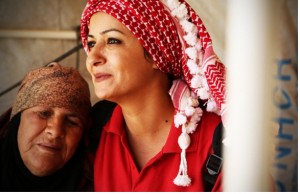
Image: WE-Women for Expo
Biography: Saba Al Mobaslat is responsible for the overall direction, leadership, and coordination of Save the Children programs in Jordan for both development and humanitarian response. She was assigned as the Team Leader for the Syria Response in Jordan in March 2012, and led the start-up, strategy and scaling up of the response in Jordan. Saba was educated at Jordan University and at the University of Framingham-Boston, USA. Throughout her 22-year career in the fields of engineering, development and humanitarian response, Saba has worked in some of the most challenging countries and territories in the world, including Lebanon, Jordan, Egypt, West Bank, Yemen, Tunisia, Libya and Azerbaijan. She participated in a number of crisis responses and has worked with refugees in various contexts in the Middle East.
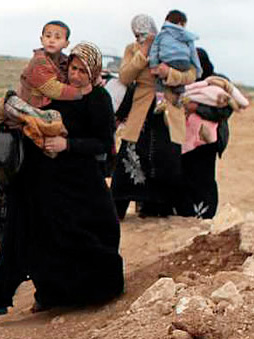
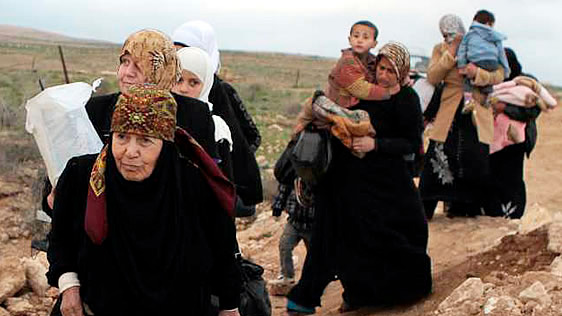
Image credit: UNHCR/N. Daoud. A line of Syrian refugee women, some carrying children, cross into Jordan from southern Syria.
Haim Bresheeth, 20 March 2014
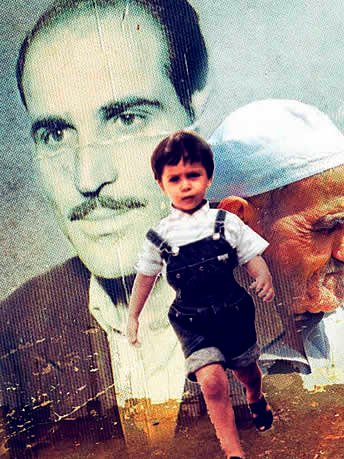
An edited version of a longer interview between Counterpoints Arts and Professor Haim Bresheeth, SOAS, prior to a BFI panel following the screening of ‘A World Not Ours’ by Mahdi Fleifel for Refugee Week 2014.
Image credit: Nakba FilmWorks
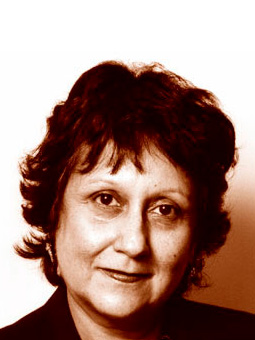
Yasmin Alibhai-Brown, 8 September 2013
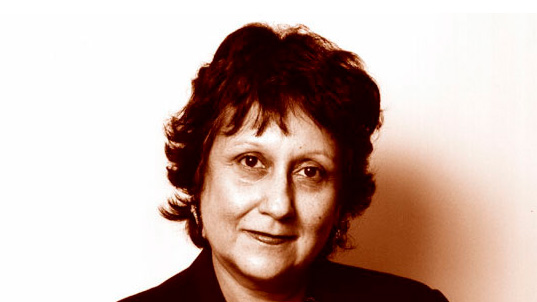
‘How you are in a different language… personality, your values, everything changes’, says Yasmin Alibhai-Brown.
An eloquent storyteller and unrelenting critic of the human consequences of failed democracies, Yasmin switches codes between fiction, journalism, broadcasting, theatre, and the culturally transformative power of food. Listen to Yasmin talk about the politics of storytelling here…
Following a 3-day Learning Lab facilitated by Yasmin Alibhai-Brown, Yasmin was interviewed by Susan McKay, journalist and creative writer. This public interview took place at the Chester Beatty Library, Dublin Castle, 2010
Yasmin Alibhai-Brown is a journalist who has written for ‘The Guardian’, ‘The Observer’, ‘The New York Times’, ‘Time Magazine’, ‘Newsweek’, and ‘The Mail’. A regular columnist for The Independent and London’s ‘Evening Standard’, she is also a radio and television broadcaster and author of several books, including The Colour of Love (1992); No Place Like Home (1995); True Colours (1999); Who do we think we are? (2001); After Multiculturalism (2000), and The Settlers Cookbook: A Memoir of Love, Migration and Food (2008).
Handel Wright, 8 September 2013
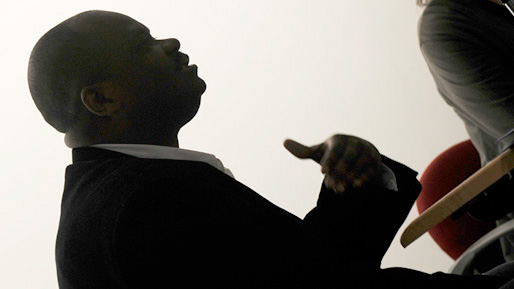
The difference between teaching and critical pedagogy is vital to Handel Kashope Wright: ‘Critical pedagogy brings to the floor issues of social identity’ revealing where power resides and inequalities are preserved.
‘Multiculturalism’, ‘anti-racism’… terms often used without their cultural and historical meaning. Listen to Handel talk about how different politics, peoples, places intersect…
Following a 3-day Learning Lab, facilitated by Handel Wright, Handel was interviewed by Mica Nava (Professor in Cultural Studies, University of East London (UEL)). This public interview took place at the Chester Beatty Library, Dublin Castle, 2010.
Handel Kashope Wright is Director of the Centre for Culture, Identity and Education at the University of British Columbia, Vancouver. He is co-editor of the book series African and Diasporic Cultural Studies, associate editor of Critical Arts and serves on the editorial board of the International Journal of Cultural Studies; the European Journal of Cultural Studies; Topia; the Canadian Journal of Education and Postcolonial Studies in Education. He has published extensively on continental African cultural studies, cultural studies of education, critical multiculturalism, and anti-racist education.
Image credit: Veronica Vierin
Andrea Durbach, 8 September 2013
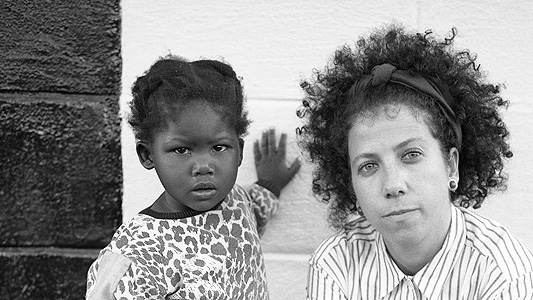
We were initially drawn to Andrea Durbach’s beautifully crafted memoir Uppington - a story of personal and political transformation.
She believes the law can be used ‘to hold people accountable, to give visibility to things that were otherwise invisible…’ Mitzi Goldman’s recent documentary A Common Purpose is a moving chronicle of Andrea’s unwavering commitment to navigating social justice through the language of human rights and the law. Andrea talks about some of these issues here…
Following a 3-day Learning Lab, facilitated by Andrea Durbach, Andrea was interviewed by Mary Fitzgerald (Irish Times’ Foreign Affairs Correspondent). This public interview took place at the Public Interest Law Conference (PILA) in Dublin, 2010.
Andrea Durbach is the Director of the Australian Human Rights Centre and Professor of Law at University of New South Wales (UNSW). Born and educated in South Africa, she practiced as a political trial lawyer and human rights advocate, representing victims and opponents of apartheid laws. Her areas of expertise include: access to justice, legal ethics and public interest litigation; and the implementation of economic, social and cultural rights. Her memoir Upington (1999), published by Allen & Unwin in 1999 was recently adapted by Mitzi Goldman into the documentary film A Common Purpose (2011).
Image credit: A Common Purpose
Kartemquin, 7 September 2013
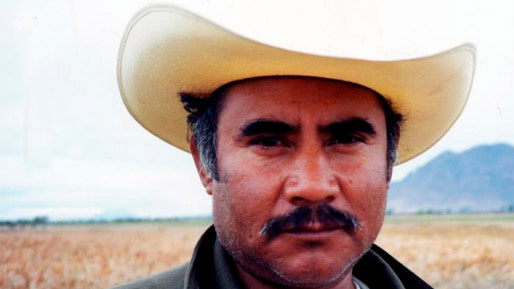
Released in 2003 by Chicago-based production company, Kartemquin, whose reputation for pursuing social justice through creative documentary is unparalleled, The New Americans portrays migrant subjects struggling to claim their place in the ‘American Dream’.
Through global stories of love, loss, gain, separation, transformation, culture clash, optimism and new beginnings.
Kartemquin also pioneered social engagement strategies in an expansive audience engagement campaign negotiating with advocacy organisations and broadcasters, specifically ITVS’ Global Voices Series and Community Connections Programme.
Production on The New Americans coincided with the first round of Immigration Reform Campaign in the US in 2001 – a campaign persuasively framed by Camerini and Robertson’s 12-part documentary How Democracy Works Now (2014).
Little over a decade later, The New Americans already shows signs of aging in contrast with the more recent Documented (2013) – an unapologetic, autobiographical film with Jose Antonio Vargas featuring as both director and central protagonist.
‘Televisualising Transnational Migration: The New Americans’ (2007) interviews the transnational production crews of The New Americans 7-hour mini series – going behind the often hidden scenes of research, production and distribution.
Image credit: Kartemquin Educational Films