Close


 SearchMenu
1 January 2012
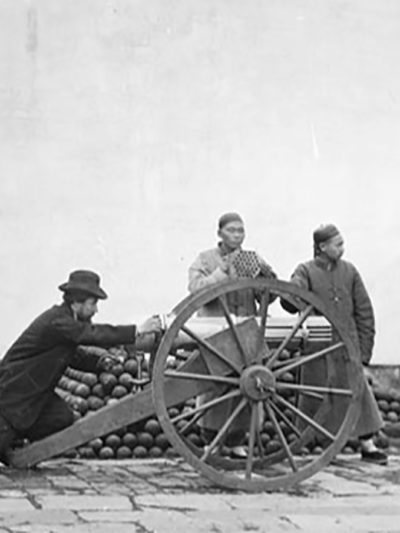
Here's a project which we worked on in 2012 in Dublin (Ireland) taking the form of a creative arts module encouraging young people to explore the growing interplay between visual art curation and new media skills in the creation of a group exhibit marrying creative practice and digital design.
Young Curators, Digital Design & the Living Archive’ arose from a conversation with diverse communities of young people spanning several years relating to a perceived difficulty in accessing arts and cultural institutions as audiences and arts practitioners.
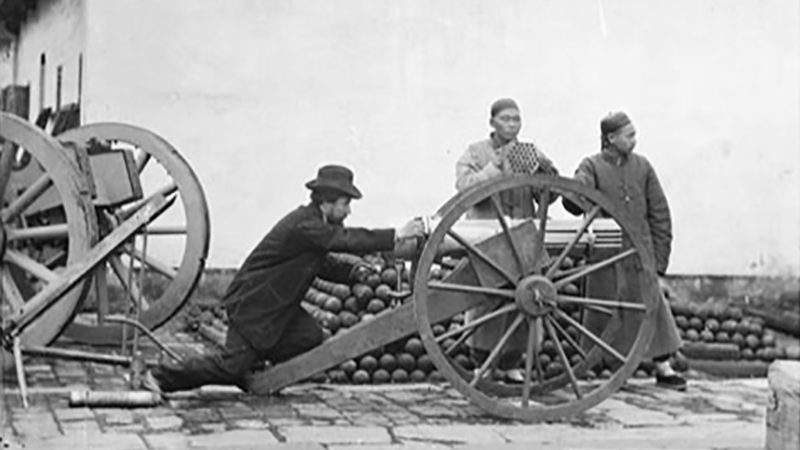
Young Curators drew upon on ‘China Through the Lens of John Thomson’, a Wellcome Trust photographic exhibition of 19th century Chinese men, women & children Participants aligned the historical practices of street and self-portraiture with the opportunities afforded by new digital platforms to contextualise, transform and display images in a networked culture.
Pivotal Arts Studio (previously FOMACS and now Counterpoints Arts) and the Chester Beatty Library – who house a collection of manuscripts, miniature paintings, prints, drawings, rare books and decorative arts dating back to 2700 BC – shared a committment commitment to bringing new audiences into the museum’s gallery space as both visitors and participants. The project was conceived as a ‘Wellcome‘ opportunity to realise a shared goal, instigating a creative process in which 6 young people take the lead.

1 January 2007
Here’s some archival content from a range of cross-sector collaborations delivered as part of the FOMACS project in Ireland from 2007- 2012.
FOMACS Retrospective – The Story So Far is a case study of creative practice, media and snapshots of projects using the arts as a catalyst for social change, advocacy and educational transformation.
Counterpoints Arts, 7 March 2015
Counterpoints Arts launched Moving Lives in 2015, an online case study of an independent law centre, The Immigrant Council of Ireland (Council).
The Council is located in Dublin working nationally and internationally.
We coined the term iPortrait to produce an interactive case study that would not merely sit on a shelf but could instead reach a wider audience. Character-driven stories in Moving Lives lead you to behind-the-scenes reflection on the Council’s distinctive way of working within the connected fields of immigration reform, strategic litigation, human rights advocacy and social justice.
These in-house reflections are clustered around the documentary films sitting at the front-end of the site. We commissioned filmmaker and photographer, Simon Hipkins from Key Pictures to help us capture the deeply personal and diverse experiences of the people who knocked on the door seeking support. The films depict what it means to be unequal before the law, to experience different levels of discrimination or to live precariously because of lack of clear residency status. Yet they also communicate the visceral power of personal agency and are rich stories of transformation and hope.
The iPortrait approach captures the dynamic ecosystem of the organization, giving access to first-hand reflections from the Council’s team, as they make sense of what they have learned on specific cases and the core policy issues navigated. The team remembers the first time they met with clients and how it impacted on them. Others take stock of why certain approaches and methods work, de-mystifying terminology for those not working in the field.
Themes focused on include: the use of strategic litigation to effect social change; key strategies in effecting change in the area of family rights, student rights, human trafficking and prostitution, due process and residency rights; access to citizenship and greater protections for migrants experiencing domestic violence and racism.
Our partners at pTools and EBOW helped us build and design a unique and robust site structure enabling Moving Lives to be a living archive and learning resource with different levels of access for the reader and viewer. Whether seeking information about relevant issues, or delving into content as a fellow-advocacy worker and activist, legal practitioner or policymaker, or simply curious to watch the film stories as a mainstream viewer, communications and media worker or interested educator, the choice is yours in Moving Lives.
Sponsors:
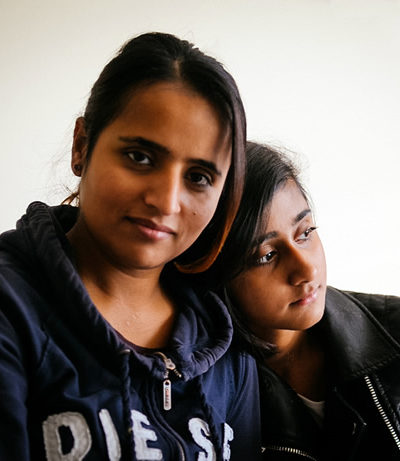
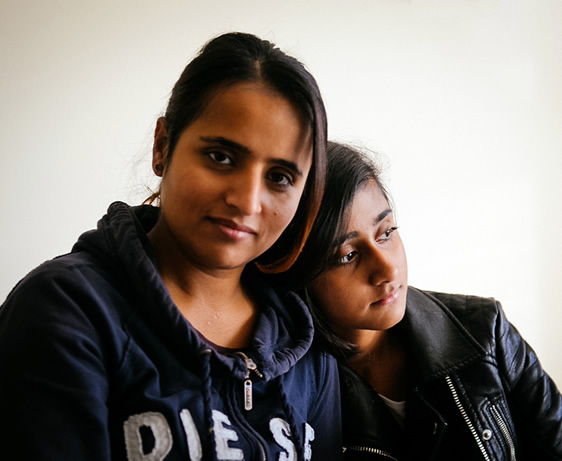
Image credit: Iram & Noor by Simon Hipkins at Key Pictures
Sue Clayton, Counterpoints Arts, 19 March 2014
Digital launch of ‘Big Journeys Untold Stories’ website and archive.
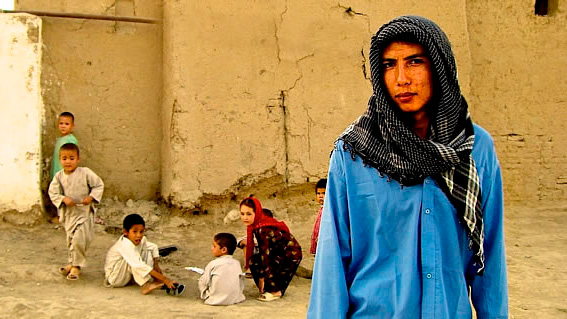
Back in January 2014, Counterpoints Arts was awarded a grant from Creativeworks London to collaborate with filmmaker, Sue Clayton, on the development of a digital archive housing film footage shot by Sue over a 12-year period. Footage capturing the experiences of separated youth living in the UK.
To date there is no specialized archive on this subject in the UK and Big Journeys Untold Stories aspires to tell a more rounded story through photos, films and prose. Sue’s footage expands the notion of the ‘journey’ by telling stories of ‘Arrival’ and ‘Living in the UK’, deliberately broadening the narrative arc to highlight what it means to spend ones formative years in the UK. Such as, putting down roots, forming friendships, missing family yet dreaming of a future in a new ‘home’ with diverse, wonderfully (sometimes whacky) energetic ambitions. As any young person might predictably aspire?
Sue puts it this way on the Big Journeys site:
As minors, separated youth living in the UK are protected by law. But when they turn 18, unless they can win a difficult legal appeal, they can be picked up any night, detained and deported back to countries that fill them with fear. What’s it like being these young people? Is Britain really home to them? Can they ever find a safe future? Is it right that our government welcomes them, and then treats them like criminals because they turn 18?
Arrival Story 1
Wider context:
‘Separated youth’, ‘unaccompanied minors’, ‘unaccompanied alien children’, ‘unaccompanied migrant children’ – frequently used, often interchangeable terms describing young migrants travelling alone under the age of 18. It’s a growing global phenomenon writes Amanda Levinson for the Migration Policy Institute, since ‘wherever global migration is flowing, children are caught up in the current. And like all migrants, the way unaccompanied minors are received, processed, held, returned, or integrated depends on the country in which they arrive’ (‘Unaccompanied Immigrant Children: A Growing Phenomenon with Few Easy Solutions’ – 2011).
Whether to the U.S., Australia or Europe, unaccompanied minors are most definitely on the move for many different reasons. But in the U.S. attitudes about immigration reform have yet again hardened, so much so that a recent open letter to President Obama on 2 July calls for an immediate ‘end to the Deferred Action for Childhood Arrivals’ (DACA). (DACA is a memo signed by Obama in 2012, calling for deferred action for certain undocumented young people who came to the U.S. as children and have pursued education or military service). DACA is itself a strategic compromise, given there is no direct path from deferred action to lawful permanent residence or to citizenship and both can be revoked at any time.
Penned by Republican Congressman Darrell Issa (who only 9 months ago supported a bill to give undocumented migrants provisional legal status) and signed by 34 Republicans, this letter indicates that the tide has turned for unaccompanied minors – now perceived to foment a pernicious ‘recent surge’ and undeserving of even partial ‘deferred action’.
Jude Webber writing for the Financial Times (5 July) describes the level of sheer hazard for minors travelling north from Guatamala through Mexico across to the U.S., being dumped by traffickers or navigating drug cartels who see children as yet another ‘product to peddle’. Journeys include ‘[c]landestine border crossings…involving searing heat and a heart-thumping swim across the Rio Grande (aptly called the Rio Bravo – the tough river – in Mexico) as helicopters patrol overhead’.
By any reckoning journeys undertaken by unaccompanied minors across the globe, whether to the U.S. or the UK, are heart-thumping. But what happens in the years following arrival? More urgently what happens when these young people reach 18 and are no longer protected as children, in this instance, under UK law?