Close

 SearchMenu
30 September 2026
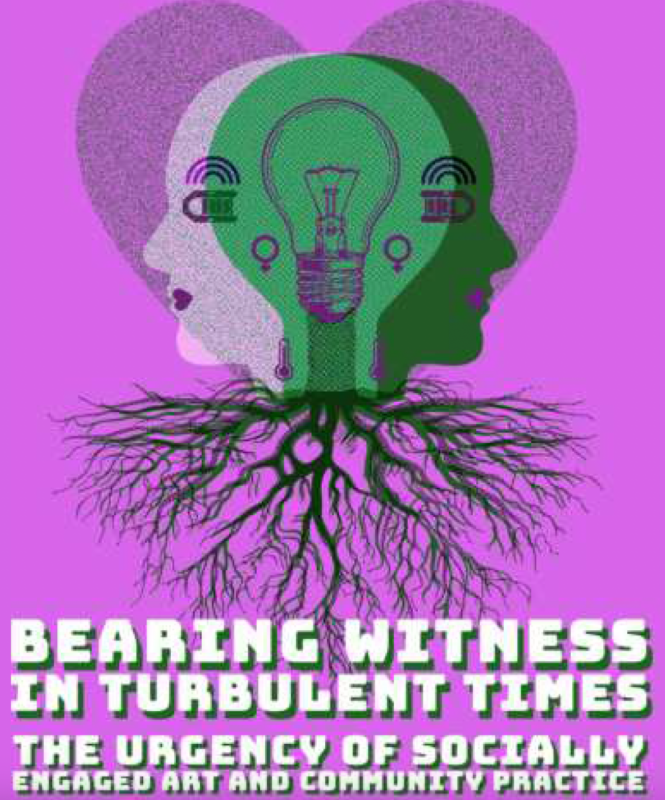
This timely gathering brings together artists, activists, policymakers, human rights researchers and social change actors to examine the urgency of socially engaged art and community practice – to consider how these intersecting fields can bear witness during increasingly turbulent times
The programme will begin with a keynote address, followed by a panel discussion in addition to live case studies, collective reflection, and opportunities for networking.
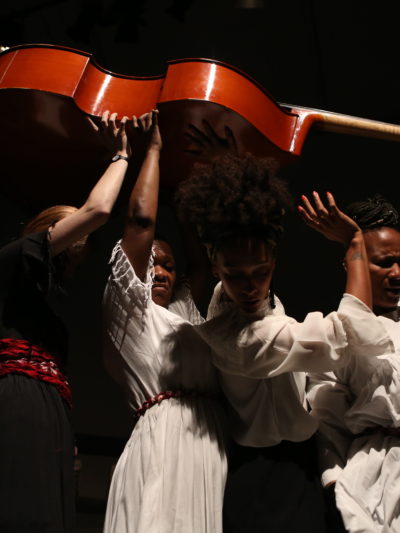
Image credit: MAC
Áine O'Brien, Elaine Forde , 10 September 2026
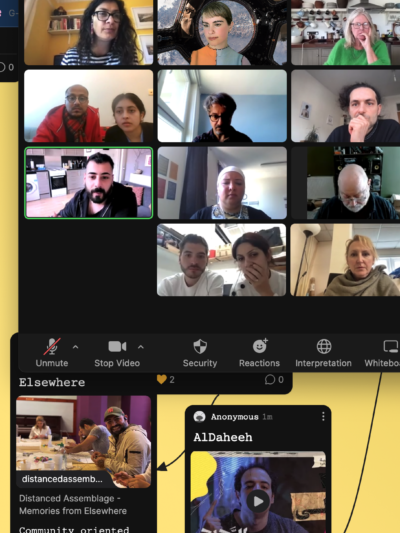
The Learning Lab Incubator was structured as a pilot programme of 5 in situ sessions in addition to online conversations (see below for the full timetable). We commissioned the artist, Kate O’Shea, to critically document in the form of a living archive the collective and collaborative research process.
Several frameworks and questions initially guide this programme:
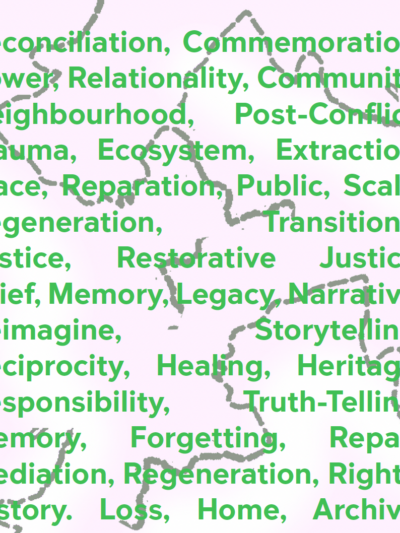
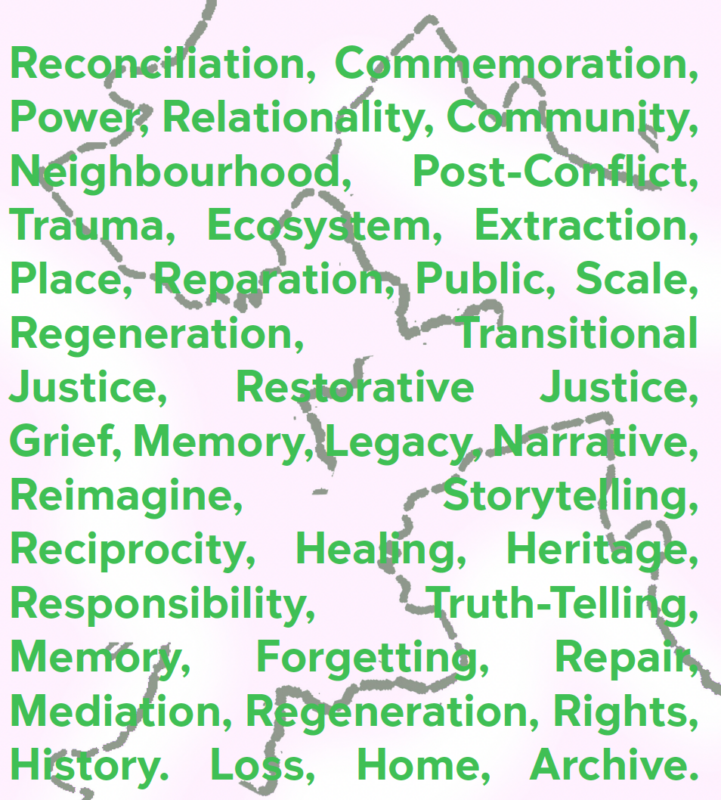
Keywords: Reconciliation, Commemoration, Power, Relationality, Community, Neighbourhood, Post-Conflict, Trauma, Ecosystem, Extraction, Place, Reparation, Public, Scale, Regeneration, Transitional Justice, Restorative Justice, Grief, Memory, Legacy, Narrative, Reimagine, Storytelling, Reciprocity, Healing, Heritage, Responsibility, Truth-Telling, Memory, Forgetting, Repair, Mediation, Regeneration, Rights, History. Loss, Home, Archive.
Image credit: Kate O'Shea
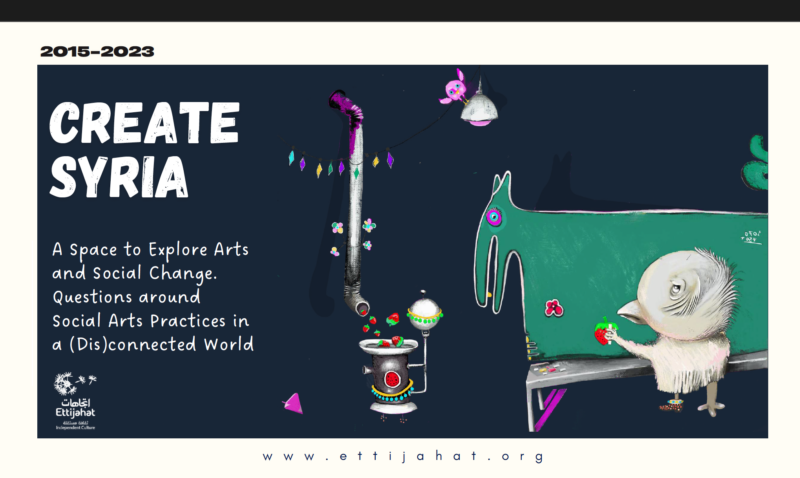
Beyond the Now: Socially Engaged Art in a (Dis)Connected World (2022-2023) was launched at the tail-end of Create Syria (2015-2023), comprising a partnership between Ettijahat in Beirut and Counterpoints Arts in London with the University of the Arts Plymouth, and the Mozilla Festival (alongside other Beyond the Now partners*). Supported by a British Council International Collaboration Grant.
‘Create Syria is a programme (2015-2023) dedicated to enhancing artists’ capabilities to contribute to the development of more resilient and unified communities. It achieves this by facilitating community art projects that prioritize experiential depth and artistic excellence’.
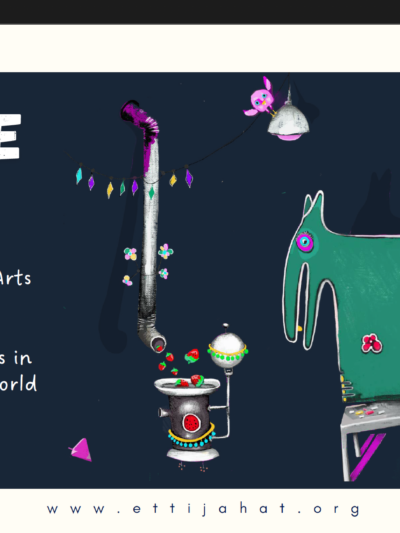
Create Syria: A Space to Explore Arts and Social Change. Questions Around Social Arts Practices in a (Dis)Connected World (2026)
Image credit: Ettijahat Independent Culture
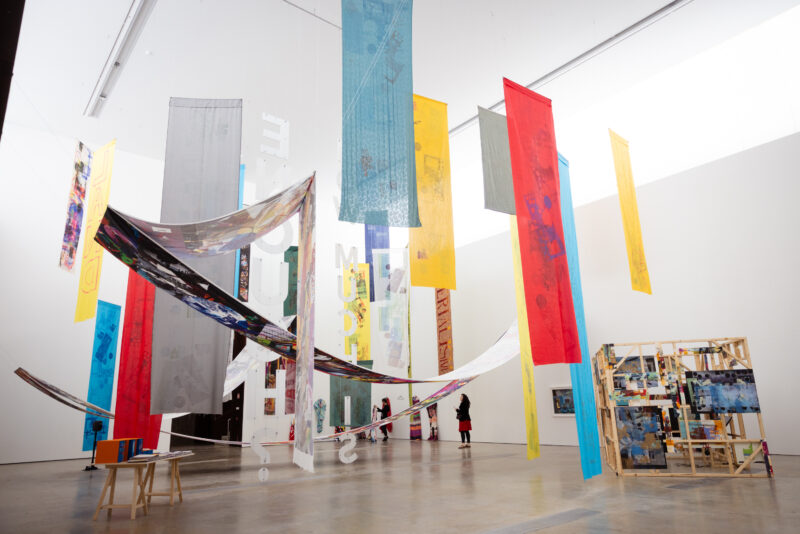
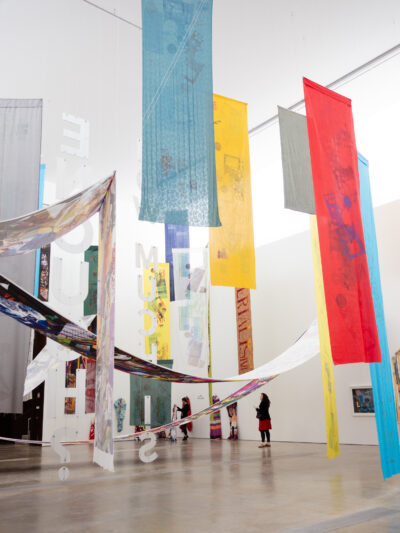
One early encounter with Kate O’Shea’s art practice literally took the form of a ‘stepping into’, when she transformed a room at the 2023 Summer School on Collaborative Practice and Social Change into a multi-layered, many-peopled archive.
Prints, books, zines, posters, fabrics and other memorabilia filled the school space with a sense of calculated chaos. From that moment, I understood O’Shea’s practice as spanning and circling a full 360-degrees. Her work resembling a ‘living archive’ in the way Stuart Hall first coined the term when reflecting on the challenges of documenting the Black and Asian artist diaspora:
Kate O’Shea’s exhibition, Mycelium, runs from 20 May – 26 August 2026 at Visual, County Carlow – Ireland.
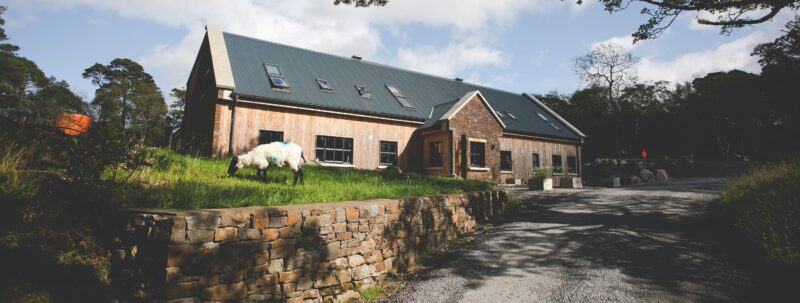
The School’s 6-day programme draws upon themes outlined in the public callout in addition to the challenges highlighted in in-person interviews.
Using international case studies and in-situ projects, the school explores the visible and invisible forms of labour and the distinct, yet interconnected skills and spheres involved in socially engaged work.
Summer School Areas of Inquiry:
Agnes Czajka and Áine O’Brien, 20 April 2022
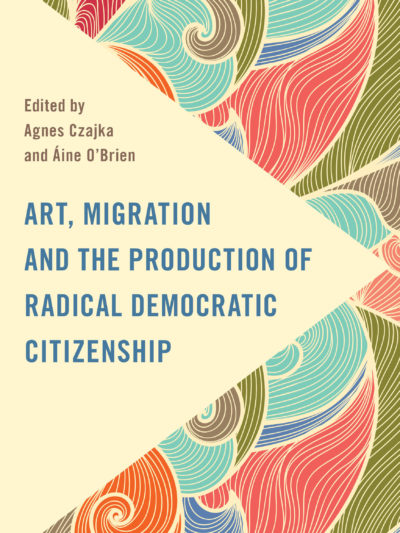
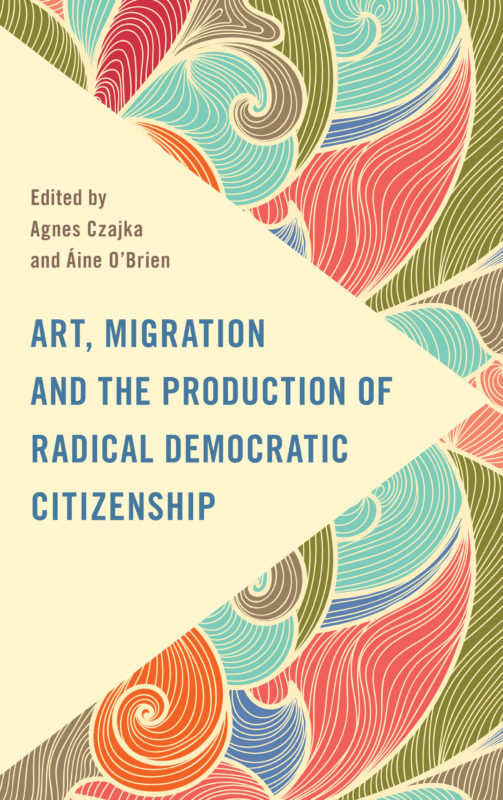
Art, Migration and the Production of Radical Democratic Citizenship Edited by Agnes Czajka and Áine O’Brien Contemporary Europe – ridden by social, political and economic crises, overlaid onto colonial and imperial trajectories, and shaken by the shockwaves generated by Brexit and wide scale human displacement – has become a space in which citizenship and belonging are contested, disrupted, performed and produced anew.
Art, Migration, and the Production of Radical Democratic Citizenshipexplores the contribution of migrant and refugee artists to the performance and production of radical democratic citizenship in Europe. It foregrounds the insights of artists and cultural actors with diverse experiences of migration and displacement to fractious public debates about citizenship and belonging. It explores how migrant and refugee artists have audaciously inserted themselves into, and are pushing the boundaries of these debates, challenging and unhinging dominant interpretations of the parameters of European citizenship and belonging.
Part I of this edited volume is comprised of a series of short provocations by artists spanning and intermixing a range of art forms and methodologies including live art, visual art and public installation, community and site-specific durational work, or the combination of writing, auto-ethnography and media activism. The second Part comprises longer, more sustained engagements by visual and live art practitioners, dramaturges, curators and academics. These chapters focus on performative, participatory, auto-biographical and auto-ethnographic artistic processes and practices.
Art, Migration, and the Production of Radical Democratic Citizenship highlights the critical interventions by artists who have experienced firsthand the everyday realities of displacement, focusing on how their diverse practices offer incisive challenges to existing regimes of citizenship and democracy.
Published by Rowman International – Frontiers of the Political Series, 2022
Image credit: Chloe Batch
Summer School team and invited participants , 10 April 2023
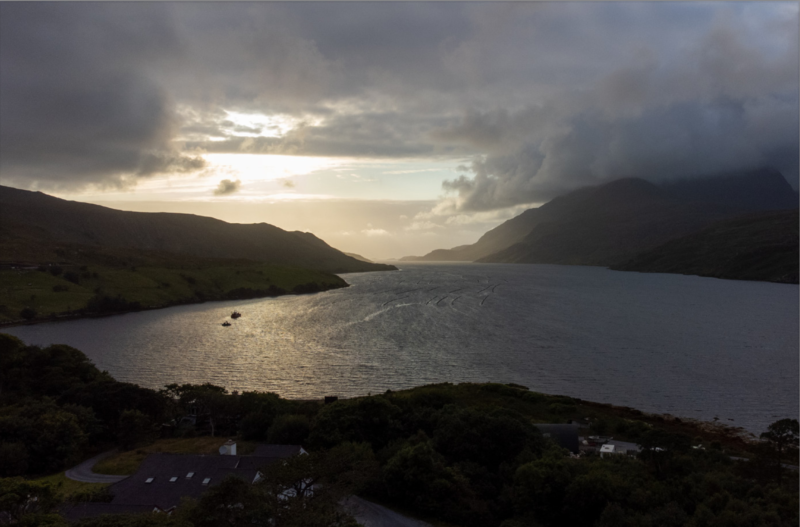
The Summer School was established five years ago. Beginning in 2018 in Carlingford near the Cooley Peninsula, it moved west to Killary Harbour in 2019. Out of necessity, it migrated online during the pandemic in 2020 and 2021, returning to Killary in 2022. In many ways, the School has travelled through a tumultuous period, during which time the impact of the pandemic took its heaviest toll on local communities everywhere.
Since its launch, the Summer School programme has included a rich list of practitioners: from Khaled Barakeh and Mary Ann DeVlieg, together with Isabel Lima, Caroline Bergvall, Abdullah AlKafri, Juan delGado, Dana Olărescu, Ismail Einashe, Kit Braybrooke, Dominik Czechowski, Nike Jonah, Natalia Palombo, Sarah Allen, and the Haven for Artists Collective.
In many ways, the School operates as a creative crossroads, with the focus pivoting around facilitators’ areas of production, research and organisational preoccupations – resulting in a mixed bag of conversations with participating artists contributing through the lens of their practice, while, at the same time, encouraged to question the boundaries of that very practice.
Beyond the Now Collective, 5 October 2023
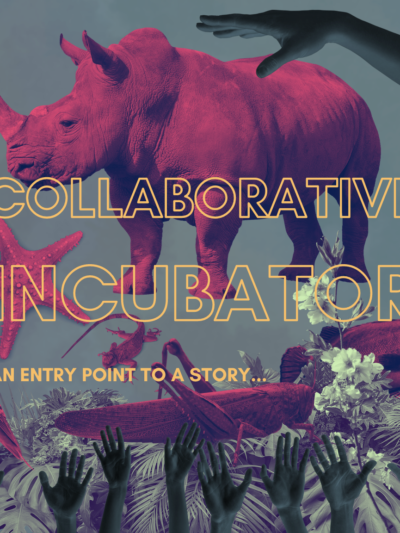
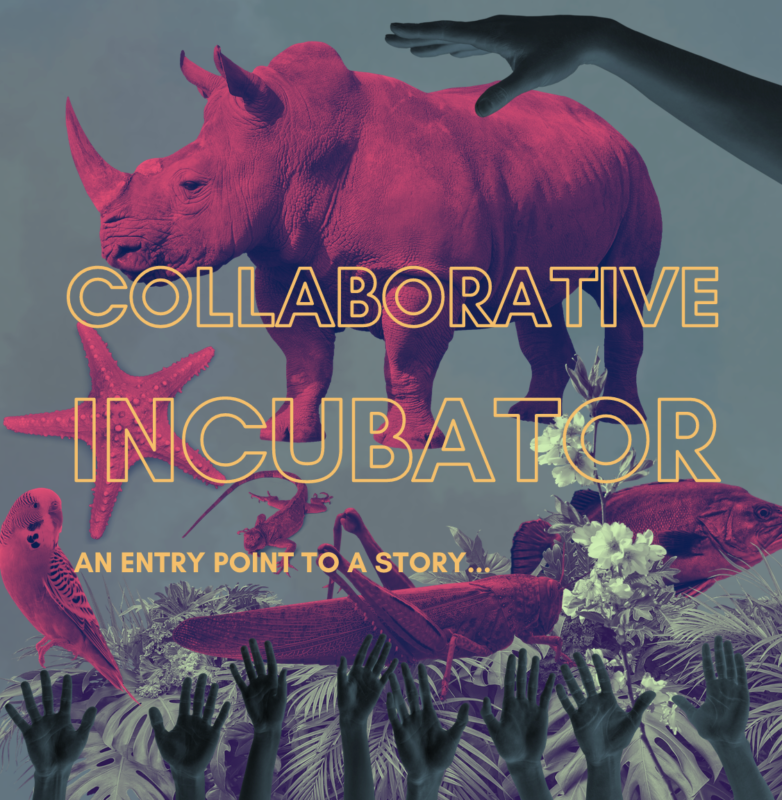
Curated and produced by the Beyond the Now collective (in the context of Re-framing Migrants in the European Media), the Collaborative Incubator Toolkit is the result of a long-form conversation in which journalists, digital activists and socially-engaged artists draw on their own experiences of migration and forced displacement to inform their criticisms of the way migration is represented by legacy media.
Curated and produced by the Beyond the Now collective (in the context of Re-framing Migrants in the European Media), the Collaborative Incubator Toolkit is the result of a long-form conversation in which journalists, digital activists and socially-engaged artists draw on their own experiences of migration and forced displacement to inform their criticisms of the way migration is represented by legacy media.
Image credit: Isabel Lima
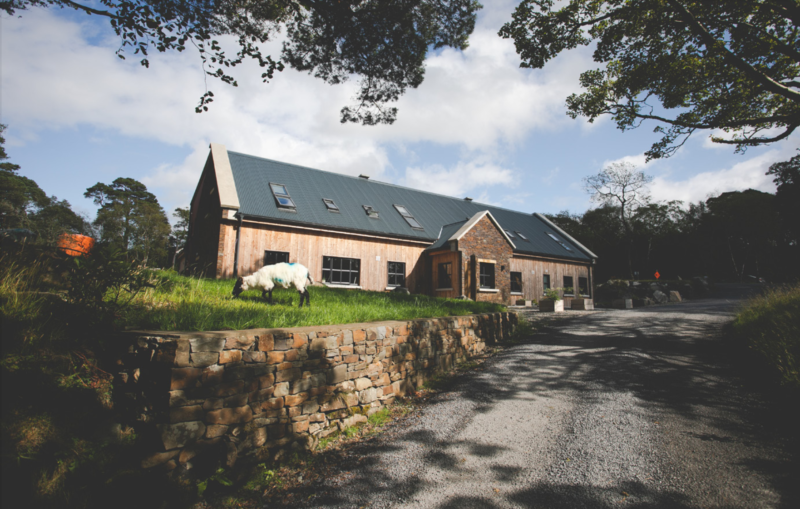
Over five days, participants in the Summer School learned and unlearned together through a mix of cooperative activities – working alongside each other to share practices, methods, challenges and ideas and dreams for new projects.
In its sixth, the Summer School takes place in a world increasingly shaped by displacement and uncertainty. Tumultuous times, to be sure, but with seeds of hope, resistance and imagination, evident in your diverse yet interconnected practices. From the interdisciplinary visual arts to music and Hip Hop, live performance, film, photography, design and dramaturgy, you all bring to the School a timely mix of collaborative and socially engaged practice, blending art with civic activism and community engagement.
The 2023 Summer School’s special focus is on collaboration between artists and investigative journalists, with the aim of integrating the place-based skills of socially engaged arts practice with the forensic, storytelling skills of journalism.
Visiting international facilitators in 2023 include: Ismael Einashe (investigative journalist), Abdullah Alkafri (dramaturge) and Dana Olarescu (artist and designer in social practice).
13 July 2022
The 2022 Summer School programme lays out a a five-day residency enabling a ‘think and do’ collaborative approach.
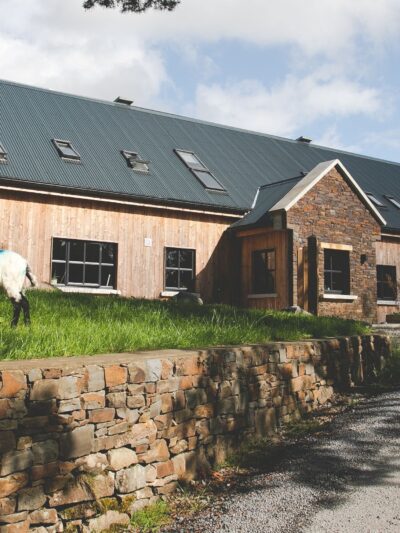
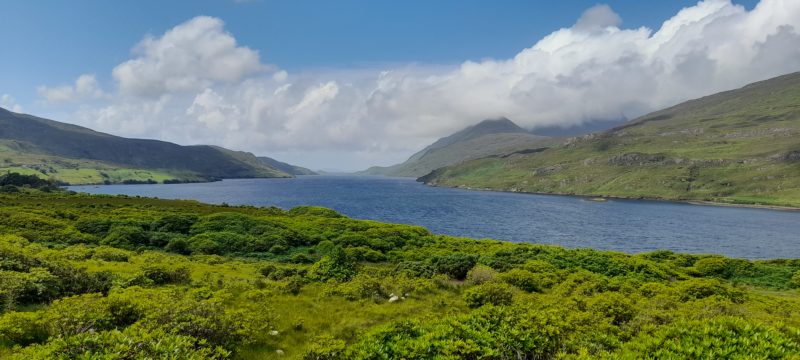
Over five days (13-17 July), artists gathered for the Summer School on Cultural Diversity and Collaborative Practice in Leenane, Connemara, Co Galway, Ireland.
We were finally back in place after 2 years of being online – with contributions from Haven for Artists, Beirut; in addition to Mozilla Fest, Amsterdam and London; Deveron Projects, Aberdeenshire, Scotland; Ismail Einashe speaking from Nairobi, Kenya; and Kit Braybrooke from Berlin and much more.
The 2022 Summer School programme lays out a a five-day residency enabling a ‘think and do’ collaborative approach, utilising a combination of creative workshops, critical and comparative case studies, a creative group challenge, one-to-one mentoring, together with international guest artists including curators, policymakers and activists. In addition to an extensive reading list for research beyond the school.
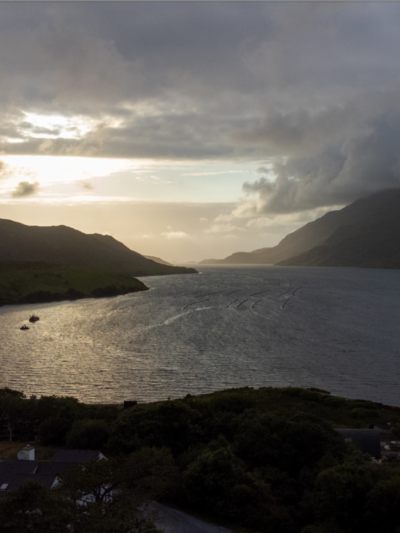
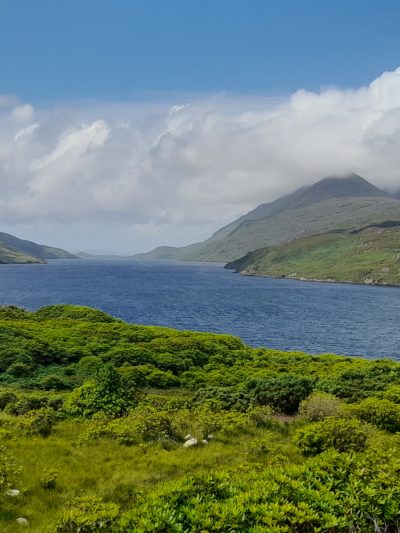
Image credit: Leenane, Killary, Co Galway - Ireland
13 October 2022
We are pleased to publish the Mutual Affinities Learning Lab Programme
We are pleased to publish the Mutual Affinities Learning Lab Programme and to welcome selected artists, organisations and visiting participants.
We look forward to collaborating with facilitators from international locations to help foster a sense of openness and solidarity across borders; with the aim of cultivating a series of interconnected conversations encouraging us to continue to learn and unlearn with each other.
Selected artists work across a range of art forms, including visual arts, live performance, music, film, mixed media plus site specific installation. Many are engaged in and are exploring the politics of identity, belonging and place in projects that often incorporate community engagement and participation.
Arists: Mousa Al-Nana; Shatha Altowai; Saber Bamatraf; Paria Goodarzi; Basharat Khan; Francisco Lines; Iman Tajik; Ako Zado.
Organisations: Rachel Disbury, Alchemy Film and Arts; Alison McMenemy, Highland Print Studio; Tim Nunn, Govanhill Baths; Natalia Palombo, Deveron Projects; Helen Trew, Art27
Visiting Facilitators: Kit Braybrooke, Habitat Unit at Technische Universität, Berlin; Dominik Czechowski, International Curator, Researcher and Writer UK/Poland; Nike Jonah, PACE (Pan-African Creative Exchange); Elham Khattab, Out of the Circle, Cairo and the Cross Commons Curatorial Collective; Isabel Lima, Gresham Horse Project, Newcastle, UK; Natalia Palombo, Deveron Projects, Huntly, Scotland; Sally Watkins, B-Side, Isle of Portland, UK.
Director: Áine O’Brien, Curator of Learning and Research and Co-Founder Counterpoints Arts; Producer, Isabel Lima with support from Stuart Cameron, Equality, Diversity and Inclusion Officer, Creative Scotland
Áine O'Brien , 22 April 2022
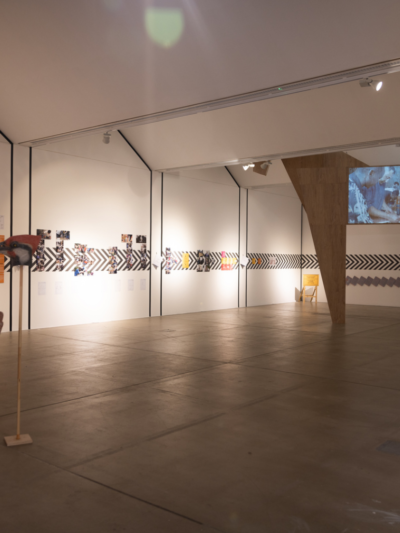
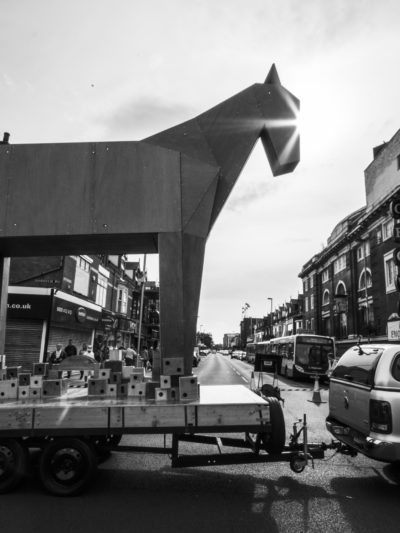
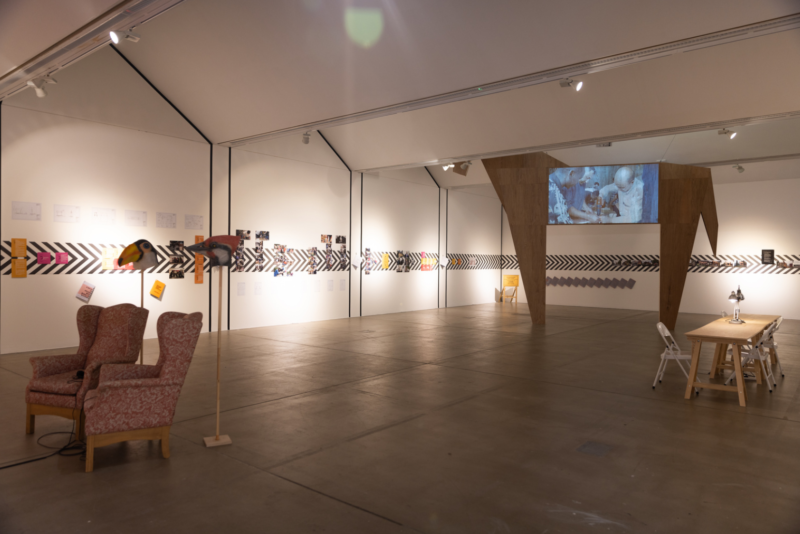
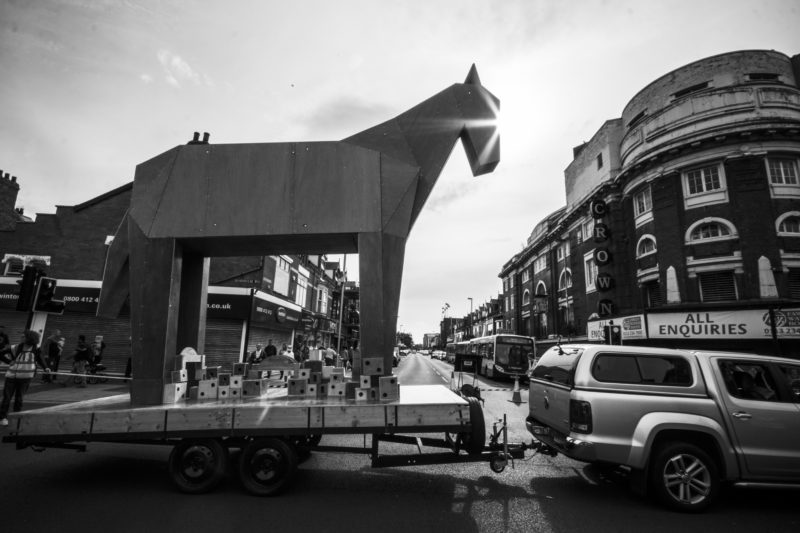
There is something seemingly implausible about Isabel Lima’s exhibition, Gresham Wooden Horse, currently showing at Newcastle Contemporary Gallery (17 Nov-10 December 2022). For the orientation of socially engaged art practice is mostly rooted/routed in and on place-based social relations, ‘participation’ and ‘process’ rather than via ‘object’ production in the context of a gallery aesthetic.
Having spent several years working alongside and with different communities in Gresham, Middlesborough (a series of neighbourhood projects navigated through collective making and public performance, workshops, relationship-building and urban planning), Isabel Liam has chosen to ‘translate’ this significant body of work into and beyond the context of the gallery. In so doing, she follows (though with different aims) international artists such as Suzanne Lacy, Pablo Helguera, and Tania Bruguera in moving the politics of social practice into the museum and gallery space via installation and public conversation – a trajectory strategically deployed through the lens of pedagogy.
Image credit: Isabel Lima, 2022
28 September 2021
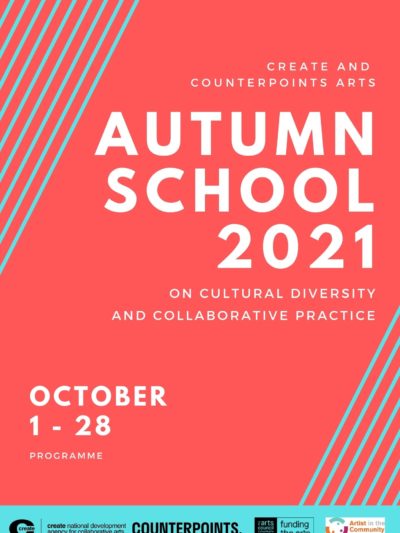
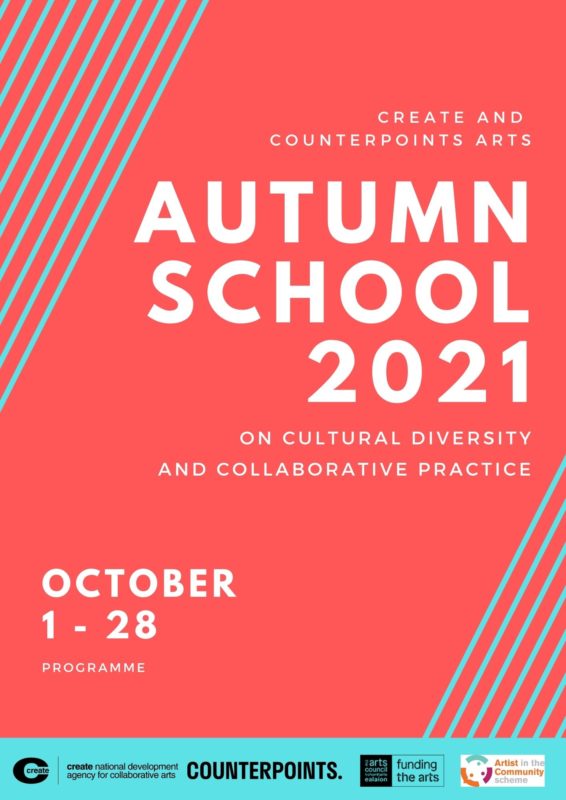
We are delighted to announce the publication of the programme for the 2021 Autumn School on Cultural Diversity and Collaborative Practice.
We are delighted to announce the publication of the programme for the 2021 Autumn School on Cultural Diversity and Collaborative Practice.
Now in its fourth year, the 2021 School will take the form of a five-day virtual residency enabling a ‘think and do’ collaborative approach, utilizing creative workshops, critical and comparative case studies, a creative group challenge, one-to-one mentoring.
International guest artists including curators, policymakers and activists: Dana Olărescu, Dominik Czechowski, Ismail Einashe, Isabel Lima, Nike Jonah.
A special feature in 2021 will include a School event with investigative journalist, Ismail Einashe, at Platforma 6 on 22nd October.
The 2021 School on Cultural Diversity and Collaborative Practice is an initiative of Create, the national development agency for collaborative arts (Ireland) and Counterpoints Arts’ Learning Lab (UK); it is funded by the Arts Council of Ireland’s Artist in the Community (AIC) Scheme.
9 June 2021
We are pleased to publish the proceedings from the Learning Lab: Collaborative Arts, Diversity and Social Justice in partnership with CREATE (Ireland).
For Counterpoints Arts, conversations about art, migration, equality and the right to have rights are best navigated with people who straddle comparative locations and identities – where both learning and unlearning is performed through a crossing of personal, organisational, practice-based and geographical borders.
Cross-border conversations play an integral part of Counterpoints Arts’ mission as a learning organisation, facilitating horizontal spaces in which to share both challenges and successes of respective work and projects.
The delivery of this event with Create (Ireland) involved deep listening and reciprocal exchange, echoing the ethos and intersectional pedagogy of the Counterpoints Arts’ Learning Lab. Enabling both organisations (in Dublin and London) and participants (virtually all over the globe) to cast a collective inquiry about cultural rights and what we might mean by democratic ‘participation’ in the arts.
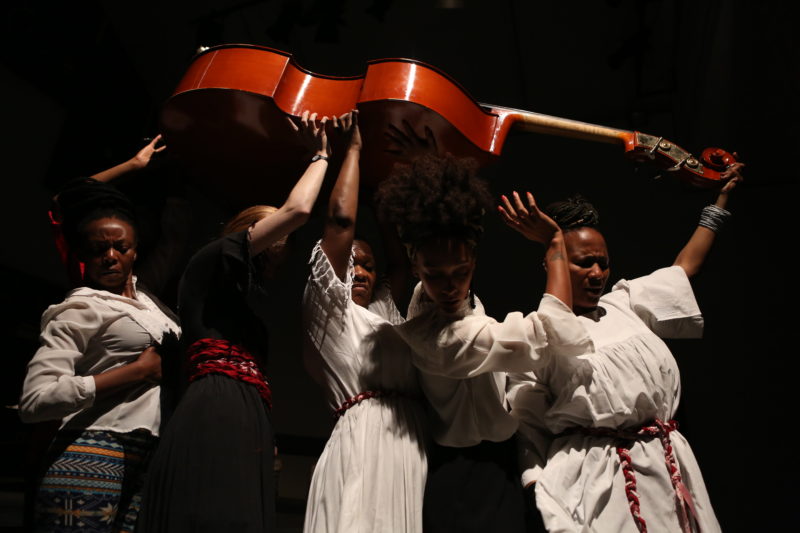
We hope that you enjoy this Learning Lab publication, illustrated throughout by the rich breadth of case studies and grassroots interventions alongside perspectives honed from flagship art institutions. Or evident in the examples of experimental initiatives stretching collaborative process and practice together with the challenging of art and social justice policy via unique and dynamic provocations.
Image credit: Her City, Centre for the Less Good Idea. Photo: Zivanai Matangai
3 November 2020