Close


 SearchMenu
‘In the nightmare of the dark all the dogs of Europe bark, and the living nations wait, each sequestered in its hate’ W.H. Auden ‘In memory of W.B. Yeats’ (1940)
Strong collaborations begin simply.
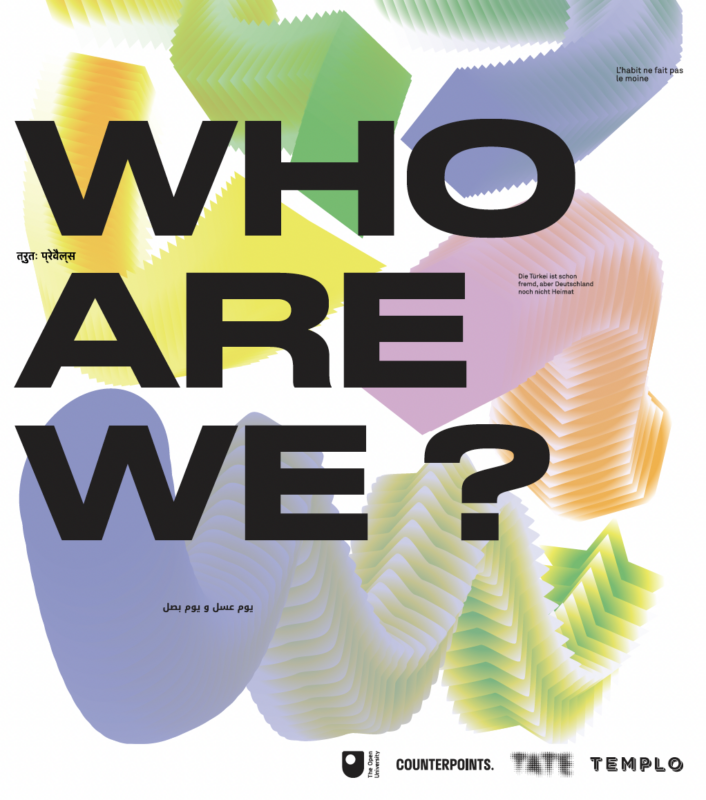
The collaboration between Counterpoints Arts and The Open University was initiated in 2016, when the title Who Are We? was aptly coined and a project at Tate Exchange, exploring interconnected themes of identity, belonging, migration and citizenship through the prism of the arts and audience participation.
Image credit: TEMPLO
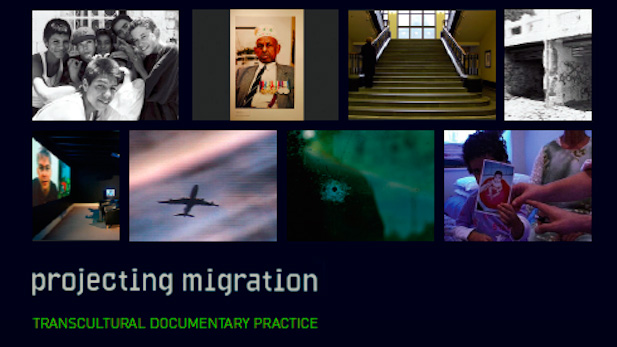
Alan Grossman, Áine O'Brien, 1 May 2008
A groundbreaking book/DVD-ROM project that explores contemporary ethnographic narratives through the medium of film, photography, multimedia, and radio
Published in 2008 by Columbia University Press, Projecting Migration: Transcultural Documentary Practice is a groundbreaking book/DVD-ROM project that explores contemporary ethnographic narratives through the medium of film, photography, multimedia, and radio. The DVD contains media material from each of the essays while the text engages and interprets migration through the medium of image and sound. Audio and visual imagination is a crucial component of cultural identity, and this collection marks a major cross-media, interdisciplinary contribution.
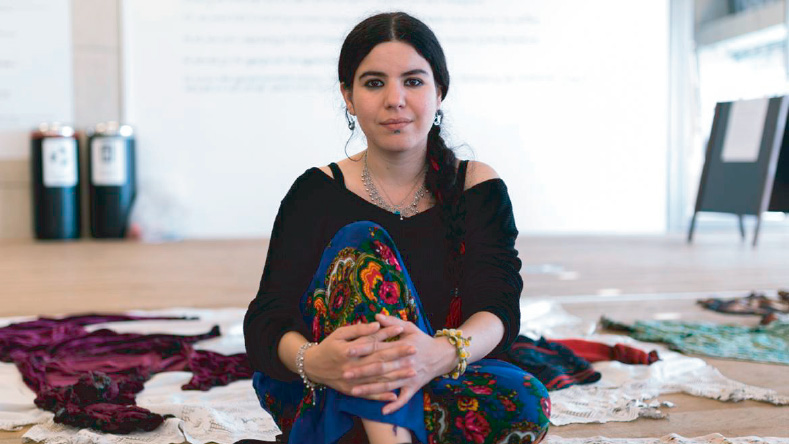
Jo Glanville, 27 January 2020
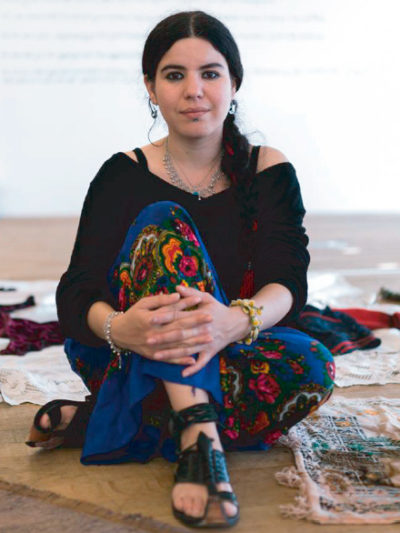
We invited participants to the Learning Lab on Li Dû Man to respond to the quote below from Zehra. This is Jo Glanville's contribution.
‘Every act of oppression creates its own resistance’ (Zehra Doğan)
This is a profound observation, like a law of physics: no act of oppression exists in a vacuum. It is not the end of the story, though that may be its intention. Oppression may seek to crush dissent, but in fact it engenders resistance. Zehra Doğan put this in another way in her letter exchange with Ai Weiwei, which you can read in the publication: ‘If persecution exists somewhere, always there is a dynamic against it. And art is the finest of those dynamics.’
This is a statement that sums up Zehra’s remarkable response to censorship and imprisonment in Turkey. It’s an expression of defiance and it’s also a call to action that can include all of us.
In her installation Li Dû Man, we can see Zehra living by this statement in everything she does. The remains of people’s lives, shattered by the conflict in Turkey, became a memorial of loss in her installation at Tate Exchange last year and also a visceral record of destruction. It’s what Áine O’Brien has called an ‘archiving impulse’ in her article with Dijana Rakovic and Jane Wells for the newspaper published as part of Li Dû Man – ‘to protect, preserve, perform and make present events, objects and the experiences of others’.
But the installation was also a springboard for action – campaigning for those in prison, drawing attention to the numbers of children imprisoned with their mothers, bearing witness to the numbers of journalists in prison. And it invited visitors to become participants in the call for action – writing letters to those in prison and voicing their own resistance. We know that these acts of solidarity matter. There’s a very moving description in Ege Dündar’s essay for the newspaper where Zehra describes receiving letters in prison, as part of the global campaign for her release: ‘[it] felt like a globally choreographed performance piece with envelopes showering into the cell, turning into colours, decorations and morale’.
Zehra’s ceaseless creativity is also testament that she lives by the statement: ‘every act of oppression creates its own resistance’. She will not cease to be creative, no matter the circumstances. As you’ll see from the newspaper, in prison, she used every object around her to make art: her own hair, her own blood, the food she ate. Everything, no matter the circumstances, has the potential to be art, a source of hope and resistance in the most extreme and apparently hopeless of circumstances.
It’s a response that demands enormous courage, which we may not all be capable of. But I think it’s a statement that can provide enormous hope in the darkest of times, not just in Turkey or other authoritarian regimes, but wherever there is need for political action – everywhere. As Ege wrote in his inspiring piece in the publication – this is about exchanging and engaging. It’s about collective action.
Jo Glanville
Jo Glanville is a writer, journalist and campaigner for human rights. She has written for the London Review of Books, the TLS, the Guardian, the Independent and the Bookseller, amongst other publications. She is the former director of English PEN, an award-winning editor of Index on Censorship and a news and documentary producer at the BBC.
Image credit: Seref Ozdemir, T24
1 January 2012
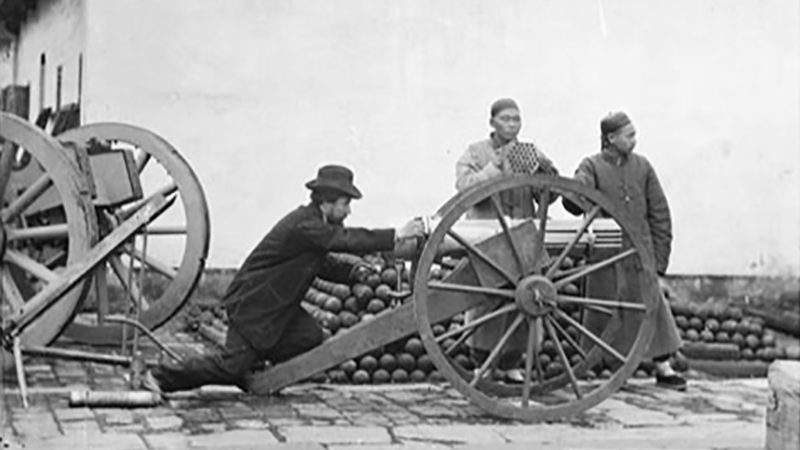
Here's a project which we worked on in 2012 in Dublin (Ireland) taking the form of a creative arts module encouraging young people to explore the growing interplay between visual art curation and new media skills in the creation of a group exhibit marrying creative practice and digital design.
Young Curators, Digital Design & the Living Archive’ arose from a conversation with diverse communities of young people spanning several years relating to a perceived difficulty in accessing arts and cultural institutions as audiences and arts practitioners.
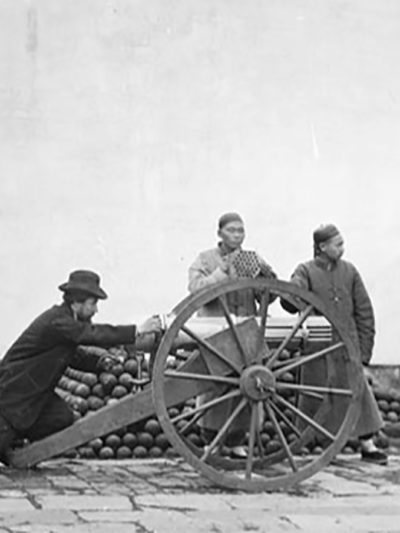
Young Curators drew upon on ‘China Through the Lens of John Thomson’, a Wellcome Trust photographic exhibition of 19th century Chinese men, women & children Participants aligned the historical practices of street and self-portraiture with the opportunities afforded by new digital platforms to contextualise, transform and display images in a networked culture.
Pivotal Arts Studio (previously FOMACS and now Counterpoints Arts) and the Chester Beatty Library – who house a collection of manuscripts, miniature paintings, prints, drawings, rare books and decorative arts dating back to 2700 BC – shared a committment commitment to bringing new audiences into the museum’s gallery space as both visitors and participants. The project was conceived as a ‘Wellcome‘ opportunity to realise a shared goal, instigating a creative process in which 6 young people take the lead.
1 January 2007
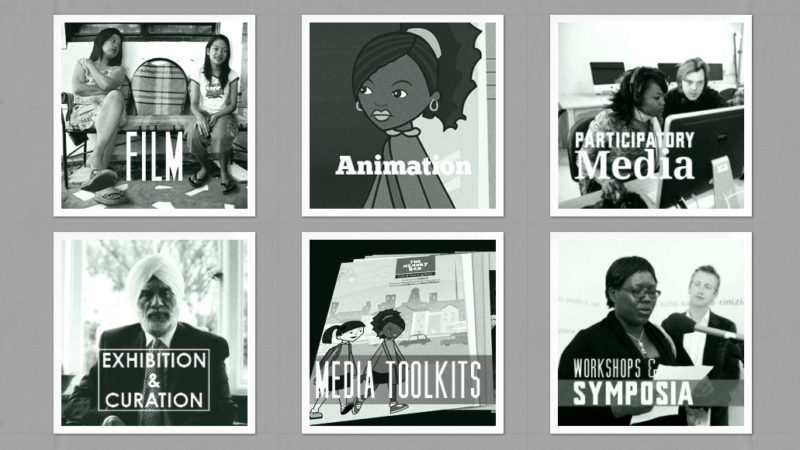
Here’s some archival content from a range of cross-sector collaborations delivered as part of the FOMACS project in Ireland from 2007- 2012.
FOMACS Retrospective – The Story So Far is a case study of creative practice, media and snapshots of projects using the arts as a catalyst for social change, advocacy and educational transformation.
Jasleen Kaur, 23 February 2016
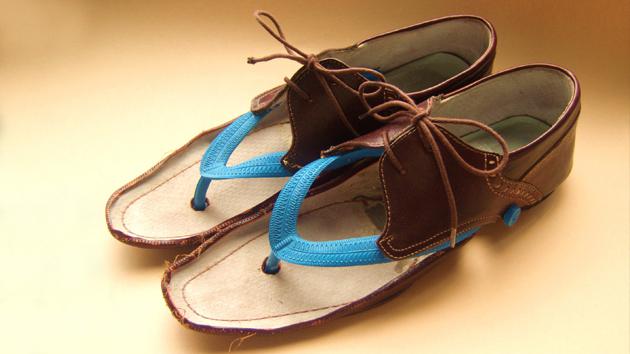
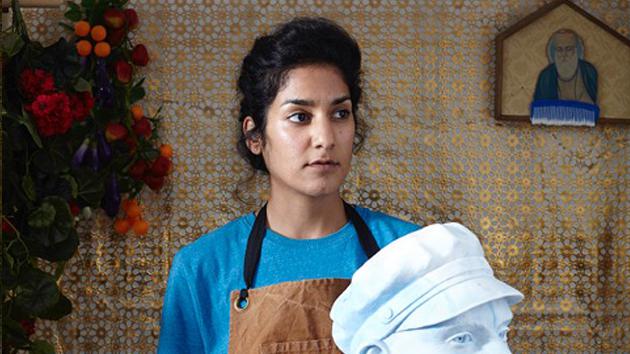
British Council's 'Voices' speak to a bodging practitioner. Jasleen Kaur was one of six artists chosen by Counterpoints Arts to exhibit in their collaboration with the Ben Uri Gallery for the Unexpected: Continuing Narratives on Identity and Migration exhibition of 2016.
Here she speaks about her work with everyday objects, reframing their relevance and meaning in cultural traditions and human behaviour. This approach has drawn on her self-described ‘multiple identities’, from Glaswegian to British-Indian to British-Asian to Punjabi, which, she says ‘provide me with a richness that I often draw upon in my work.’
In this interview with the British Council which coincided with the Migration Lab held at the Design Museum in collaboration with Counterpoints Arts, Jasleen describes how she began using ‘found objects’ in her work, later dismantling and reforming hybrid objects. Through ‘bodging’ she not only repurposes but also subverts and reimagines their meaning in people’s understanding. When asked about the relationship between migrants and material possessions, Jasleen says ‘It’s a façade that what you carry with you, or what you wear, say who you are. Your possessions don’t necessarily match what’s going on in your body or mind. It’s much more complex than that.’
Linking in with the Make Do & Mend movement popular in the arts, her ‘bodging’ workshop at the Migration Lab in the Design Museum with Counterpoints Arts delighted and challenged participants to become ‘bodgers’ themselves and explore, through objects that we carry with us, the themes of identity and loss .
Our thanks to Jasleen, Charlotte Ogilvie and the British Council.
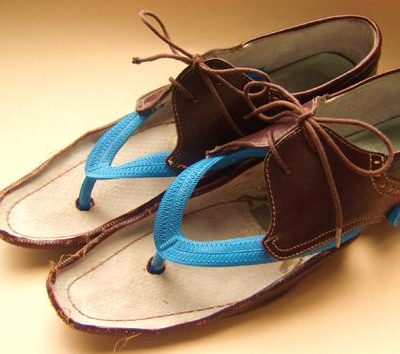
Image credit: Jasleen Kaur 'My dad's a proper businessman who dresses ‘improperly’ and I wanted to reflect this in something as basic as a shoe.'
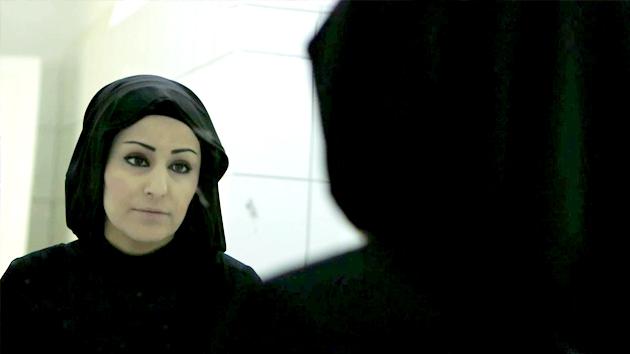
Yasmin Fedda, 10 November 2015
Syria is still deep in an active conflict, and its people still need outlets to share their experiences.
Director Yasmin Fedda spoke to the British Council about her film Queens of Syria, a documentary following the adaptation of the Euripides tragedy The Trojan Women. Filmed in 2013, Fedda followed 50 female refugees living in exile in Amman, Jordan coming together daily to work with the ancient text and in the process ‘drawing parallels with their own lives’.
The importance of such a project? According to Yasmin, this platform was ideally placed to begin the healing process, empowering a group of Syrian woman to redefine how the world sees them. Film is so accessible as an art-form and a documenting device in contexts such as this, according to the London-based director/storyteller. ‘Storytelling and creativity in a time of conflict may seem like a frivolity, but they couldn’t be more important. They make us think.’
Syria on the Road: Stories of Conflict, Migration and Place (Learning Lab, Leicester, November 2015) with Counterpoints Arts discussed the changing nature of screen storytelling and Yasmin and participants at the workshops addressed questions such as: What kind of storytelling matters? What equipment matters? What different form or process does it take to make these films; Are they reactions to a situation or the emergence of a new aesthetic?
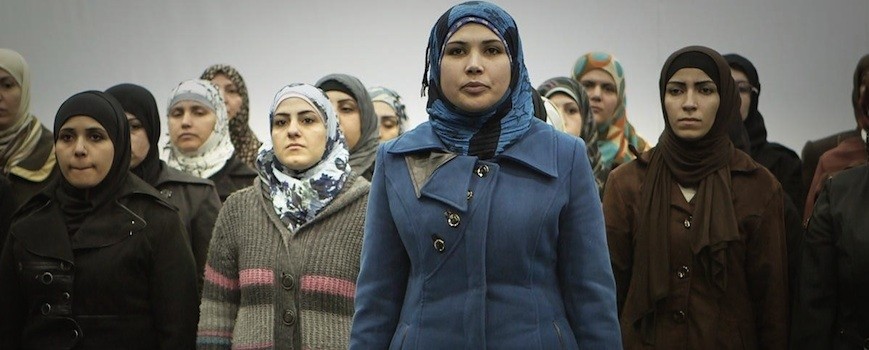
Suad, a young Syrian woman who fled her homeland for Jordan during filming of the documentary puts it perfectly: ‘I have a scream I have to let out – I want the world to hear it’, Giving voice to these women was how the project started yet Fedda notes how she was embraced by the group who opened up and shared their stories with her.
Our thanks to Charlotte Ogilvie and The British Council.
Saba Al Mobaslat, 6 September 2015
Interview conducted for Out of Place Learning Lab: ‘Creative Responsibility and Human Rights: Telling the Untold Stories of the Crisis in the Mediterranean’ at Counterpoints Arts’ ‘dis/placed’ Exhibition, The Ditch Shoreditch Townhall, London
Learning Labs form part of the Out of Place Action-Research Platform (a project led by Counterpoints Arts’ Learning Lab, in partnership with Royal Holloway, University of London and FilmAid).
Gillian Gordon (RHUL/FilmAid) and Áine O’Brien (Counterpoints Arts)
Transcribed by: Eloise Maland
Just one day before World Refugee Day 2015, the numbers of displaced people are approximated at almost 60 million people. This is both overwhelming and unprecedented.
Saba: Yes, it is, and no one can tell what is going to happen overnight, because the fighters and the fighting are quite mobile and the situation in Syria is extremely fluid. For instance, early yesterday morning there was very intense fighting in Quneitra, which is at the border with the Golan Heights. More displacement, a lot of uncertainty and I fear for the stories that are not being told. We know what we know, but there is a lot more that I think the world doesn’t know about. And I am a bit disappointed to say that sometimes I feel the world does not want to know what is happening, because then they will have to hold themselves responsible, morally. And it is a decision to be ill informed so that you have less pressure to do more.
One could arguably compare the current level of displacement to World War II, where people initially turned away – turned a blind eye – from acknowledging or overtly recognizing what was happening.
Saba: You know I think with all the technology, all of the civilisation we claim, we are not able to deal with things in a more assertive way. If you look at the discussions these days on the media, it is all about migrants going to Europe, as if this is the problem. The problem is not about migrants going to Europe. To put your life and the life of those you love on a boat, with zero certainty that you will make it to a shore, means that you are running from something much worse. And this is the moral question I think that we, as citizens of the world, have to say that we take responsibility (and we want an answer), and that we demand clarity from our governments, our politicians, those who fund all different parties. Because I don’t think this war is continuing without some organised funding mechanism. There has to be a broader debate, led by a mass of people who consider themselves responsible for humanity. Forget about politics and politicians, this is shameful. To be part of a world that cares less about the life of people, this is the shame.
I feel ashamed by not being able to answer simple questions I get asked by my own sons, like ‘Mum, why is Europe talking about migrants being their ultimate problem’? So why, then, aren’t we all contributing to broader discussions so we can solve the actual problem – the unjustifiable level of violence in this region?’ And I am really wordless. After four years of assuming that we are doing what we can to save people’s lives, I have my own questions on a personal level, not just on an organisational level. Like: how good our job is, and are we really saving lives? And if we are saving lives, are we promising people a better life, and where would that be? How much more can be done to reach the point where people can be whom they choose to be? To be caught in a war that is not of your choice, and for you to pay a price that is beyond your capacity, is just so unfair.
How do you see it affecting the younger generation, being born into it but also being pulled into the middle of the conflict very dramatically and so recently? What are the conditions for families and children when they actually arrive in the camps?
Saba: That actually should be the ultimate concern of the entire world. It is not about migrants escaping to Europe, it is about how this part of the world we are in, basically the Middle East, is going to perceive the rest of the world when we have a generation after another growing into violence. When violence is the only language through which they can debate things and change their reality. What impact does that have on the global citizenship or on us as human beings? When you feel left alone to fight a fight that is so unjust and so unfair, and you are left to either live or die, you become by nature very angry. And that anger gives you enough reason to want to fight against the entire world. And then you start classifying and categorising the world into those who are with you and those who are against you. And you accept being violent with those who you assume are against you.
That is our real fight. Our real fight is not the political military fight in Syria, or even in Yemen or Libya. It is about a generation after generation growing so used to violence; seeing it in the news, playing it on play station, seeing it outside their little house, or whatever remains of their little house. Then expecting them to act in a civilised way and engage in a dialogue to reach a peaceful solution?
We are people of our own environment. If that is my surrounding, how do you expect me to grow and be acceptable to others – accepting others, being neutral, civilised and engaging in discussion? That is the concern. As an Arab Muslim woman, my concern is that there will be a time where we as human beings will not find a common ground that can hold us together against conflicts which lack in fairness or are unjust. We will find enough reason to continue to fight against each other. And that is a vicious cycle that will not be broken anytime soon. Unless we look at the broader, bigger root causes. It is no longer about the military action. It is no longer about a regime we had here or an opposition there. It is about engaging as human beings, creating common ground, deciding how to re-engage on a very human level in a discussion that might lead to positive change in our lives across the globe.
This is no longer a problem related to a particular religion or race or region; this is global. And that is what I fear about. We have a generation who is now being lost. We have a generation of frustrated, angry, hopeless youth and children. And I fear that when their anger is channelled in any particular direction, it will be extremely disruptive to any attempt at peace or human-to-human dialogue.
Is there any possibility of intervening? How would you do that? Obviously Save the Children is working with young people all the time, what are some of the things that you are thinking about in terms of interventions?
Saba: We do have a lot of initiatives, and we are trying our best. But at the end of the day, Save the Children is one organisation, and that is a drop in the ocean. There has to be a broader decision made to institutionalise some of the initiatives we are trying to introduce to young people. One of the very promising, at that time, initiatives was the ‘No Lost Generation’ where organisations from the UK, the US, Canada, Europe came together and decided that we are not going to allow the world to lose a generation and we are going to invest in putting an end to lack of access to quality education, investing in peace making, investing in the basic life skills. But the room for this space is shrinking, because I can be talking about all these things, but in the absence of any certainty about food aid finding its way to hungry people, access to drinkable water, I wouldn’t even dare to say to clean water, how are you going to engage in a discussion around peace? Human beings needs are all equal. I cannot have the luxury of creating a space where I can talk about the higher, moral, ethical debate when the very basics are not met.
I tell you from where I stand, as a Country Director for Save the Children’s operations in Jordan, I do know that by the end of July I will have to stop my World Food Programme Implementation because we are running out of funds. When I am faced with 600,000 hungry people, how am I going to bring them together to a child or youth friendly space and talk about peace? We need to connect to interim solutions, be it access to food, access to shelter, a dignified living, for god’s sake, before we talk about peace. Otherwise that won’t sell high and that is my biggest fear.
Unfortunately there are those who may not be interested in talking about peace, but do have enough money to provide services to people: food, water, shelter. When you provide the basics to a hungry, homeless person, you can then dictate your agenda. And that is also my fear. Our fight is very vicious and not balanced, and when I say our fight, I say the fight for a future versus the fight that we are stuck in.
So through you, through this platform, this is a call to the world. If we want a better world we have to stand up and say we are all equally committed to bringing the violence to an end. And that will not happen only by a soft intervention talking about peace making and reconciliation. This has to respond to people’s basic needs and then take a step forward in the right direction.
When people go on these dangerous journeys, can you describe what happens when they get to a refugee camp, or what is the next step? And the type of work Save the Children is doing to help them create temporary lives in the camps?
Saba: I can talk from my professional experience here in Jordan. Once you are in a camp, you are in a camp. And then you have to come up with a routine that makes you remain sane, feel productive and have a sense of time. Because as human beings we do need that sense of routine; wake up, go to work, do the groceries, go to school. You need some sense of structure. And looking at refugees here – I won’t make you cry over a sad story of a refugee – they are extremely resilient. It takes them a couple of weeks or sometimes a month or two to pull their act together, but eventually they do understand that their resilience is the only way for survival. So they come up with their routine. It may make sense, it may not make sense, but to them it’s the only way to remain sane and to feel that ‘I am alive’. But refugee camps all around the world are fenced, and if you are to live in a fenced fancy area, I wouldn’t say a desert in the middle of nowhere, you would lose a sense of place and a sense of time. So that is my concern. You can make a temporary life in a camp. But that is not a life. And that is the concerning bit.
If you want me to describe Za’atari, there are no colours in Za’atari. I always say I love it when children walk into our Save the Children child friendly spaces or kindergartens because there are colours. We have over a thousand children who were born in Za’atari camp. Their only exposure to the full spectrum of the rainbow colours is a box of crayons in a kindergarten. I am not trying to sound emotional or sentimental, but I want you to understand that when we, in ten or fifteen years time, question why did we have a generation of tough, rough, brutal human beings, that will be my question. They were not exposed to life or colours at the right time. Therefore they had to survive and it is a tough environment, so they grew up tough. And they grew up feeling that they were left to fight a fight of no choice, alone. And now they will seek revenge, and that is concerning, very concerning.
We do a lot of interventions in the camp to explain what it means to communicate in a civilised way. We have bloggers; we have photojournalists trying to keep their life connected to the other world because unfortunately the other world can’t stay in touch with them. But there is a limit as to how many pictures you can upload from a camp, and you can sense the repetition, and they say they can’t find anything new to share with the world. That is the beginning of hopelessness. And that is what we should all stand up and fight against. If we allow a generation to grow up hopeless then I am not sure what future will be waiting for all of us.
One of the things that we as arts and culture practitioners are talking about is how can the arts engage and make a difference; how can we mediate in some way? Of course realising we can’t do things like help with the practical matters of water or electricity nor do anything medically. But storytelling can sometimes be a powerful tool.
Saba: I can share with you very interesting social media stuff we have been doing with children in the camps and you might find it useful. This isn’t Save the Children trying to dictate what we want the displaced children to tell the world. This is a space that was created for them and now fully owned by them. They take pictures of their daily lives; they connect with other children elsewhere around the world and they blog. And that is to us the simplest form of art. Some of them do draw, and I can share with you brilliant pictures about early marriage, the reflection of girls on early marriage. But we found that a disposable camera in the hands of a child, going around, can allow them to capture the world through their own eyes. And what is really amazing is the fluctuation that you see in their reflection, or what they choose to capture in a weeks period. So sometimes it is the dirt and the lack of water and the despair. Sometimes it is a football match between little kids playing and just having fun. And when you think about it and forget about the context and the fences and the camp, they are just like all of us. They go through turmoil of emotions.
Unfortunately for children particularly and young people, adolescents, trapped in a camp, the overall ‘feeling’ spectrum happens to be extreme. So they don’t have the ability to come to terms with the emotional waves they could be going through. They could be happy and laughing now and then suddenly they start swearing and kicking and hitting. And that is a very natural, psychological reaction to the situation they are in. And that is what we fear. As sane, normal people you can read my facial and physical expression and tell when I am about to get angry. If you are in despair, you tend to flip moods without any triggers, and that is extremely concerning. So this is the art I would want people to see, not the art we choose to use as an expression of the situation, but the pictures, the photos children choose to capture to share with the world. And surprisingly enough, some of them say we hide the worst of our lives because we don’t want people to feel sorry for us.
There was a very interesting interaction between a group of people who came from the UK to visit our spaces in Za’atari camp and a group of children. One of the girls stood up towards the very end of the discussion and said ‘ Why are you here?’ And a gentleman from the delegation said ‘We are here because we would love to get to know you and we are here because we want to tell the world your stories.’ And she said ‘I don’t want your pity because I am tough and strong.’ She is thirteen years old. He is sixty-nine. She stood up, taller than him, looked him in the eye and said ‘Do not pity me.’ This is the beauty of resilience, but how strong can you be, how resilient can you be when you are being broken every minute. You reach a point where you are shred into thousands of pieces, and you recollect yourself and make a full human being out of yourself. It becomes really tough and difficult.
So, yes, I can tell stories about resilience. I mean the fact that they still do wake up every morning and go and collect their bread means that they insist on continuing to be alive. That is resilience. They are definitely resilient. They are very tough, very strong; they insist on staying alive, for their children, for whatever hopes they have for the future.
How can these stories be distributed so they are meaningful to audiences, so that there can be action in terms of things changing on the ground.
Saba: Share the link. It is simple. It has been online for quite some time; we have a thousand likes. I want these children to know that someone somewhere cares enough to click on this thing and just see what they are uploading. Engage with them, comment on whatever they post. They do really need to feel they are part of a bigger world. One thing we are keen on is not for them to feel that they are left alone. And this is not about UN resolutions; this is not about governments; this is not about politicians. This is about a human-to-human connection. This is about a mother sitting somewhere in Yorkshire wanting to tell a child in Za’atari that she cares for him or her because she is a mother and she has children, or an activist or a journalist or a media person like yourselves saying: ‘we hear your stories and we are telling them as hard and as far as we can.’ It is about that sense of empathy. The human, pure empathy that has nothing to do with funds, resolutions or politics, because all of that simply tears this world apart and creates a growing rift between human beings. All of that – funds, resolutions and politics – allows you to classify and categorise people into enemies and friends and the more enemies, the more the violence there will be. I just ask for your support to help us pull the fences down by carrying the sounds and pictures and images of these children to the world. Let people outside the camp see through the eyes of these children what everyday life in a camp looks like.
We have a Learning Lab session later today at the Counterpoints Arts’ ‘dis/placed’ exhibition in London, and we will be talking about how we can collaborate and join together across sectors to tell different stories about forced migration and global displacement – what is your ask, your message, to the people who will participate in this conversation?
Saba: Separate the human aspects of this crisis from the political tracts. Do not politicise our humanitarian responses; do not politicise human solutions to the human crisis. These are two separate things. We are (Save the Children) a non-political organisation, but unfortunately being born in this part of the world makes a politician out of each and everyone of us. We do understand politics, but this cannot be used or abused to stop or hinder our ability from being as humanitarian as we need to be, and to be out there to help people survive until a solution is on the ground. Separate these two. Second, do not put people’s development on hold until a political solution is agreed or reached.
See Save the Children’s ‘Inside Za’atari’ an iphone photography blog produced by teenagers living in Za’atari refugee camp in Jordan. This blog was initially supported by Magnum photographer, Michael Christopher Brown.
Image: WE-Women for Expo
Biography: Saba Al Mobaslat is responsible for the overall direction, leadership, and coordination of Save the Children programs in Jordan for both development and humanitarian response. She was assigned as the Team Leader for the Syria Response in Jordan in March 2012, and led the start-up, strategy and scaling up of the response in Jordan. Saba was educated at Jordan University and at the University of Framingham-Boston, USA. Throughout her 22-year career in the fields of engineering, development and humanitarian response, Saba has worked in some of the most challenging countries and territories in the world, including Lebanon, Jordan, Egypt, West Bank, Yemen, Tunisia, Libya and Azerbaijan. She participated in a number of crisis responses and has worked with refugees in various contexts in the Middle East.
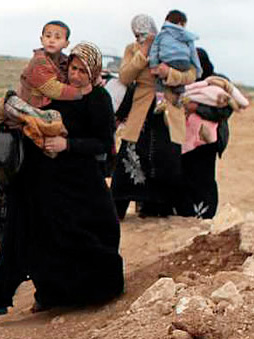
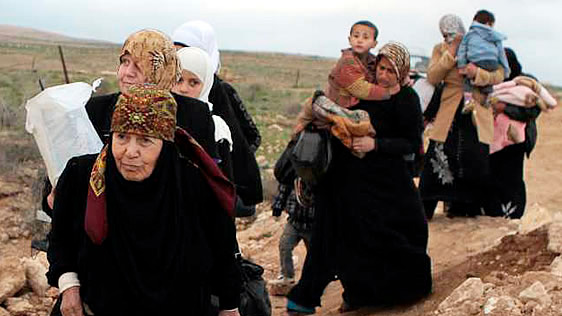
Image credit: UNHCR/N. Daoud. A line of Syrian refugee women, some carrying children, cross into Jordan from southern Syria.
Áine O’Brien, 7 August 2015
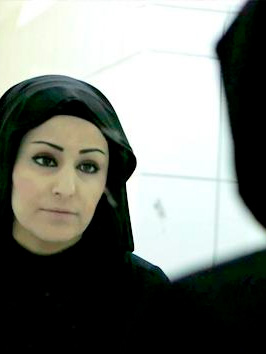
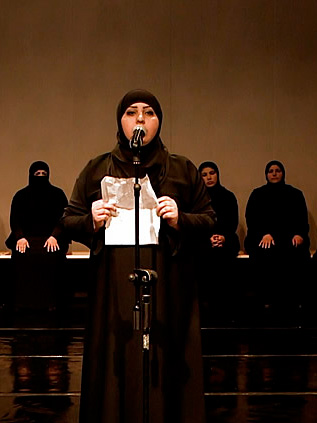
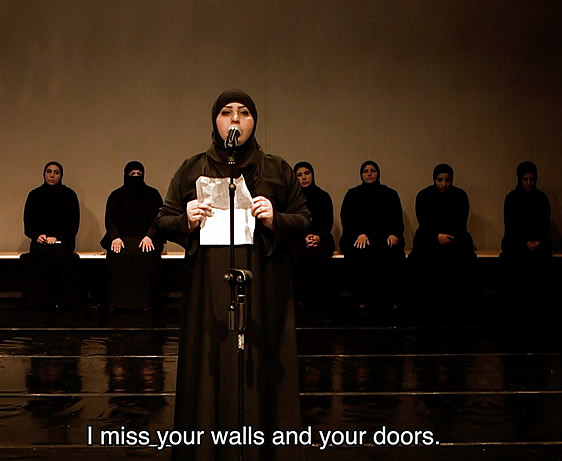
There’s an extraordinarily moving scene in Yasmin Fedda’s recent documentary, Queens of Syria. Framed in medium close up with low-key lighting, a Syrian woman - living in exile in Jordan - recites a ‘love letter’ to her lost home.
The context for her performance is The Trojan Woman – an interactive and multimedia theater project based on the classic Euripides’ tragedy. Queens of Syria follows a group of Syrian women who are refugees, as they prepare to perform the play, for the first time, to a live audience.
The Trojan Woman boldly brings into parallel space the uprooting and bereavement suffered by the fictional queens of Ancient Greece with the more modern suffering of refugee women displaced from Syria because of the war. The classic play is used as a springboard for a re-telling of the Syrian women’s experiences of violent upheaval and loss.
In this particular scene, Fatima takes her turn in front of the audience and camera.
She recites:
I miss you too my precious. I miss your walls and your doors. I miss every corner you had. I miss your stairs and standing by the window. I miss kissing your walls, and lying on your tiles. Oh my dearest house, I wish I could go back to you…so that I can tell you what happened to me after I left you. You protected me and gave me dignity. I was like a tree then someone came and uprooted me.
It is heartbreaking and powerful.
It’s the way Fedda chooses to quietly observe the women and the project team with little sense of a director’s ego, which makes this film so special. With steady ease, Fedda captures so much more than the collaborative process driving the theatre rehearsals. We watch through astute framing and alongside Fedda’s decisive gaze, a process of slow, uneven transformation and personal revelation over a 7-week period.
This is a rehearsal space peppered by rich overlapping interactions: between the refugee women, or between them and dramaturge, Omar, and his colleague, Nanda. We are pulled through a medley of complex human interactions. Euripides’ play is the therapeutic ground through which the women are eased into partial recovery; where they begin (tentatively) to give voice to traumatic memories – recalling the circumstances forcing them to flee and become ‘refugees’ in Jordan.
Queens of Syria is so much more than a chronicle of a theatre experiment; it is, in its own right an impressive artistic intervention. Fedda takes her cue from the small, at times uncomfortable re-enactments in the rehearsal space and mostly from what is left ‘unsaid’ – what cannot be expressed yet is visceral. The stories of the women’s exodus from Syria are navigated through the prism of the classical text, constantly mulled over and probed by the wonderfully humane yet firm, Omar. And Fedda’s camera is always ‘just close enough’ to capture these moments. Her technique is intimate but not intrusive.
At times Fedda strays from the intensity of the rehearsal space into some of the women’s homes, subtly framing domestic lives with children and spouses allowing us see the women in a different light. Each portrayal is evenly balanced exploring issues of gender and class with tensions between spouses registered. This is nuanced never stereotypical. The women are hugely ambitious for this play as they are for their own futures. The play is a testing ground onto which they project and map dreams and find a language to craft their own story. As Suad says ‘ I always dreamed of acting when I was young. I can’t believe my dream has come true. But only because of what is happening to my country. This isn’t how I wanted it to happen.’
Fedda chooses to end the film with a carefully constructed sequence opening the story of this experimental project and the refugee women who perform it, outward and open-ended. Leaving us to wonder ‘what will become of these women’? The camera frames the interface between performers and audience at the moment where the women collectively bow and we hear the final applause. Immediately Fedda re-directs us back to the empty rehearsal space, with each shot conjuring a memory of the magic of the rehearsals. Perhaps alluding to what has actually been achieved in The Trojan Woman or what might transpire in the future in yet another project, with another group of women who happen to be refugees.
Fedda is a hugely confident storyteller and this is a truly exceptional film.
(Reviewed by: Áine O’Brien, Co-Director – Counterpoints Arts)
Image credit: 2014. 'Queens of Syria'
Counterpoints Arts, 7 March 2015
Counterpoints Arts launched Moving Lives in 2015, an online case study of an independent law centre, The Immigrant Council of Ireland (Council).
The Council is located in Dublin working nationally and internationally.
We coined the term iPortrait to produce an interactive case study that would not merely sit on a shelf but could instead reach a wider audience. Character-driven stories in Moving Lives lead you to behind-the-scenes reflection on the Council’s distinctive way of working within the connected fields of immigration reform, strategic litigation, human rights advocacy and social justice.
These in-house reflections are clustered around the documentary films sitting at the front-end of the site. We commissioned filmmaker and photographer, Simon Hipkins from Key Pictures to help us capture the deeply personal and diverse experiences of the people who knocked on the door seeking support. The films depict what it means to be unequal before the law, to experience different levels of discrimination or to live precariously because of lack of clear residency status. Yet they also communicate the visceral power of personal agency and are rich stories of transformation and hope.
The iPortrait approach captures the dynamic ecosystem of the organization, giving access to first-hand reflections from the Council’s team, as they make sense of what they have learned on specific cases and the core policy issues navigated. The team remembers the first time they met with clients and how it impacted on them. Others take stock of why certain approaches and methods work, de-mystifying terminology for those not working in the field.
Themes focused on include: the use of strategic litigation to effect social change; key strategies in effecting change in the area of family rights, student rights, human trafficking and prostitution, due process and residency rights; access to citizenship and greater protections for migrants experiencing domestic violence and racism.
Our partners at pTools and EBOW helped us build and design a unique and robust site structure enabling Moving Lives to be a living archive and learning resource with different levels of access for the reader and viewer. Whether seeking information about relevant issues, or delving into content as a fellow-advocacy worker and activist, legal practitioner or policymaker, or simply curious to watch the film stories as a mainstream viewer, communications and media worker or interested educator, the choice is yours in Moving Lives.
Sponsors:
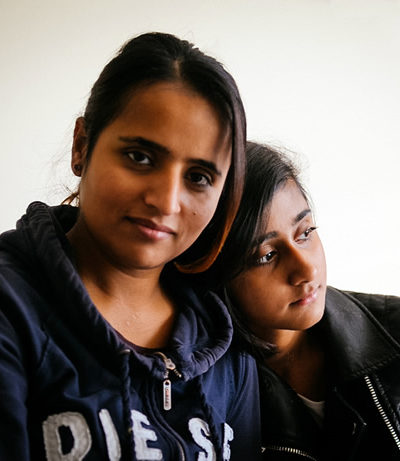
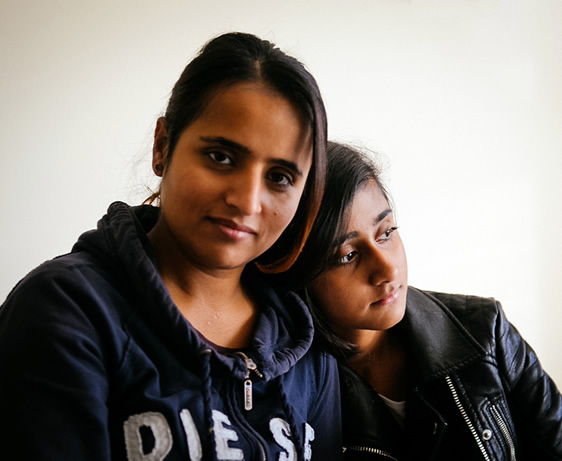
Image credit: Iram & Noor by Simon Hipkins at Key Pictures
Almir Koldzic and Áine O'Brien, 24 February 2015
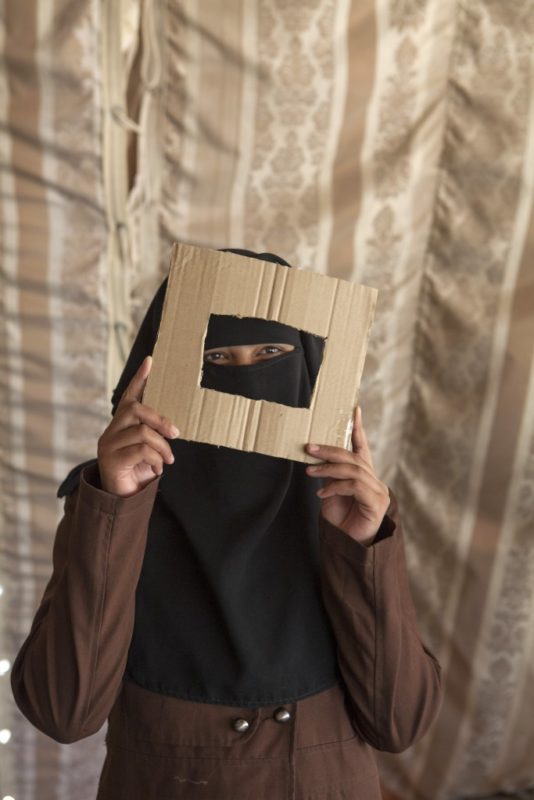
An array of photography and film, visual arts, theatre, mixed-media storytelling and online journalism is dispelling notions of refugees as voiceless victims. Almir Koldzic and Áine O'Brien report on new channels providing an antidote to mainstream media coverage of life as a refugee.
In an Amman rehearsal room are Syrian TV matinee idol Newar Bulbal, Syrian amateur actor Azmi Al Hassany, 26, and Raneen Ibraheem Aga, 23, a Syrian refugee. They are all taking part in a ground-breaking radio drama We Are All Refugees, inspired by the long-running UK radio soap opera The Archers. The refugee drama is broadcast globally on Radio Souriali, an independent Syrian station transmitted from Jordan and Syria. It is also aired in the US and via the United Nations website.
Georgina Paget, who co-produces the project with Charlotte Eagar, discusses what the project hopes to achieve: “In simple terms, the radio project aims to reach as many Syrian refugees and members of their Jordanian community as possible, with dramatized presentation of topical and relevant issues about their daily lives. It aims to help all elements of the community to have a greater and deeper understanding of the situations of others living side by side with them and highlight the benefits of understanding co-operation.”
The team’s ambition is to gain a long-term commission for the series on either radio or television. To bolster the series’ credentials they have assembled a group of established screen actors to join with refugees, co- creators and producers. The series is partly funded by the United Nations High Commissioner for Refugees, and the title We Are All Refugees has echoes of philosopher Hannah Arendt’s 1943 essay, “We Refugees”. Some 70 years later, the radio soap explores themes that now have every day and ordinary resonance, such as forced or arranged marriages for young Syrian refugee girls, domestic violence, unemployment and water shortages. It also looks at the predicament of young Syrians not allowed to work legally in Jordan and the tensions between two communities living side by side.
More than 50 million people are displaced globally, according to the UNHCR. Yet many of the images in the media are emptied of the nuanced details and the day-to-day challenges of refugee camp life. That’s why there are increasing attempts by refugee agencies and other organizations to tell refugees’ stories and make their experiences come alive. As the British writer, AA Gill, who won an award for his articles from refugee camps, puts it: “The hot news story is the conflict itself; this intransigent, complex headache of unwanted, awkward, lumpen people doesn’t have the dynamic interest of global politics or the screen-grab of smoke and bodies and Kalashnikovs.”
In the Zaatari refugee camp in Jordan, for instance, a United Nations’ project is working with US-based photojournalist Brendan Bannon, to equip young refugees with cameras, so they can take photos and write about their personal histories and memories. Their work has been published online and in newspapers. “We promised to give the kids a voice through photography”, said Bannon. “I have heard from so many people who have seen the kids work inThe New York Times and online. I am sure that the pictures are challenging preconceptions about refugee life. I hope that the work can be more widely seen in places where refugees are living today.”
Alaa, 14, fled with her family from Dara’a in Syria. She now takes photos of family, friends, neighbours in Zaatari. As the family and community chronicler, she re-imagines and documents what has been lost, discovering a voice through photography: “Although I’m shy”, says Alaa. “I had no problem showing my work and talking about it in class. We all learned to look after each other.” If she could photograph anything, it would be her house in Syria and the beautiful countryside surrounding it. “I can still remember the trees and the smell of the soil.”
On UNHCR’s Tracks website refugees tell their own stories from camps or en route to sanctuary. There are experiments in immersive storytelling and the authors use photography, video and sound. Some stories are written by journalists commissioned by the UNHCR, such as those within the Family Ties section, charting the journeys of Syrian Kurds who find refuge with their extended families in Turkey. Istanbul-based multimedia journalist Lauren Bohn tells the story of Ibrahim:
“When 41-year-old Ibrahim, one of the most cherished bread makers in the Turkish city of Suruc, heard the news that Isis was surrounding his uncle Veysi’s village near Kobane, also known as Ayn Al Arab, he rushed to grab his mobile phone. ‘I told them to get out of there right away… to come here’, he says, in the small grey courtyard of his apartment, tucked away behind his bakery just a few miles from the Syrian border. ‘It’s just as much their home as it is ours.’ So Veysi, his wife and children packed up as much as they could – some clothes, a few books and family jewellery – and fled to the border. Ibrahim, still wearing his baker’s smock, was there to greet them. ‘The Kurdish life in Syria, and everywhere, has always been hard’, says Veysi. ‘But this is something we never imagined.'”
Stories on the Tracks website come from all over the world: from the Zaatari camp in Jordan, from northern Iraq and the Democratic Republic of the Congo. Some are told from European makeshift camps like the ones in Pozzallo, Sicily or Calais, France. And soon Tracks will be inviting user-generated content so the website can help create a conversation with the wider world and refugees via social media. Another media project, Dadaab Stories, which has a lively website, is dedicated to telling stories from the enormous Dadaab refugee camp in Kenya, near the border with Somalia.
Describing itself as a “collaborative community project”, Dadaab Stories is an initiative run by FilmAid, which has been working in the camp screening, teaching and making films since 2006. It is funded by the Tribeca Film Institute New Media Fund and the Ford Foundation. Dadaab is one of the largest refugee camps in the world and “home” to approximately half a million people. The sheer scale of Dadaab is reflected in the different generations living in the camp. As the FilmAid website puts it: “By definition, a refugee camp is temporary, but life does not stop here. Love, marriage, children, work, art – life goes on. After two decades, there are more than 8000 Dadaab grandchildren, children of children who were born in the camp.”
Unlike Tracks, which casts its storytelling net globally and across refugee camps in different countries, settlements and diaspora locations, Dadaab Stories is firmly anchored in everyday camp life. While it includes perspectives from diaspora communities, the main focus is on communications within the camp through personal videos, journalism, photography, poetry and music. Powered by the social media platform, Tumblr, this is community media at its liveliest.
One of the camp’s media services led by refugees and forming part of Dadaab Stories is The Refugee News, a community-run newspaper and the only local print media outlet for the population of 500,000. It is edited by a dedicated group of volunteer journalists that come from the refugee communities within the camp, with training and facilities provided by FilmAid. The Refugee News also includes a radio station called Gargaar (Somali for assistance), supported by the international non-profit organization Internews, whose mission is to strengthen local media worldwide, enabling local people to circulate and hear much-needed news and information. The refugee journalists working on Radio Gargaar are all trained by Internews, with some working as professional journalists before coming to live in Dadaab.
The Syria Trojan Women project for refugee women in Amman, Jordan, also co-produced by Charlotte Eagar and Georgina Paget, is using the classic Euripides anti-war tragedy to interweave drama therapy workshops, participatory storytelling and public performance, in addition to promoting understanding between refugees and host communities in Jordan.[1] The drama workshops help refugee women who are suffering from mental anxiety, post-traumatic stress disorder and depression. When possible, the women are paid to participate.
This relatively modest project began in 2013 with small-scale workshops in Amman and has since spawned several spin-offs including a documentary film, entitled Queens of Syria, chronicling the project’s participatory methodology, and a Trojan Women tour to the US and Switzerland. Queens of Syria was shot and directed by filmmaker Yasmin Fedaa. Fedaa engaged closely with the cast of refugee women by spending time with them in their homes and integrating the women’s personal stories into the film. The aim is to screen Queens of Syriain refugee camps, at international film festivals and on television.
It is clear that we are witnessing the many ways in which photography and film, the visual arts, theatre, mixed-media storytelling and online journalism are transforming the idea that refugees are voiceless victims.
[1] For more on the project, see Heather McRobie, Charlotte Eagar, and Georgina Paget, “Trojan Women in the twenty-first century: Women in war from Euripides to Syria”, openDemocracy, 19 June 2014,opendemocracy.net/5050/heather-mcrobie-charlotte-eagar-georgina-paget/trojan-women-in-twenty-first-century-women-in-wa.
Almir Koldzic and Áine O’Brien’s (Co-Directors, Counterpoints Arts) article is a contribution to the spring issue of Index on Censorship, entitled Across the wires. The article is part of a dossier on everyday life in and around the world’s refugee camps.
Image credit: Brendan Bannon
Natasha, Lucy and James, 2 January 2015
Learning Lab made three short film portraits for our Counterpoints Arts' Programme Launch in January 2015, focusing on three artists in the Platforma Arts +Refugee Network: Natasha Davis, Lucy Namayanja and James Russell Cant.
Because so often the everyday labour that underpins creative work is hidden, we wanted to acknowledge it as craft, as process and as a form of quiet yet urgent knowledge production. To tell the connected story of Counterpoints Arts through the eyes, ears, hands and hearts of the creative producers who we are in dialogue with, who come from all walks of life and from equally different places. Creative practitioners who are not only pushing boundaries and challenging stereotypes but who are finding new and fresh ways to capture what it means to live in local places that are increasingly touched by the cultural realities of the global.
Natasha, Lucy and James’ work speaks for itself. There is something unique, grounded, daring, reflective and fantastically honest about how all three approach their imaginative craft. We set out to make 1-minute films; we made 3-minute films but could have easily made 30-minute films. The material we captured was rich and dynamic (and you only see here a slice of what we recorded).
Our thanks to Natasha, Lucy and James for inviting us into their homes. We thought it was important to film in an intimate, familiar space rather than the more anonymous gallery or public space. So here are 3 fleeting snapshots encouraging you to find out more about how 3 artists work in more detail.
By: Natasha
By: Lucy
By: James
Co-Produced with Faction Films in Dalston.
Áine O’Brien, 18 December 2014
Key Note Presentation by Counterpoints Arts at Creative Applications of Biographical Research: Theory, Practice and Policy, University of Durham, September 2014. Áine O’Brien, Co-Director, Counterpoints Arts
A whistle in the dark is still a whistle
Gideon Levy, The Punishment of Gaza, 2014
When asked to give this keynote, I had to stop and think about the art and craft of biography and its inevitable flow into the intimate spaces and places of autobiography. When mentoring – and as creative producer and researcher – I have long encouraged practitioners to mediate their research through a filmic, photographic and multi-media lens with a specific focus on the creative ethnographic method when researching and crafting migration stories. Seldom have I had the time to stop to think about, what I am calling a ‘biographical impulse’ – the ethical desire to co-produce urgent portraits of ‘others to others.‘
I use the term co-produce in two ways: to refer to the logistics of film production where collaboration is simply a given – one works with others in order to collectively produce content. But also to refer to the more nuanced, intersecting boundaries of documentary co-production found in the empathetic storytelling space between biographer/filmmaker and subject. A fluid, dynamic space often compromised by conventional claims to research and authorship.
Debates about the methodologies of participatory, collaborative arts are being grappled with differently in the visual arts with arguably heightened levels of angst on the part of some artists about the ethics of community participation. Much of what I outline today draws from the practice of creative documentary; but I also refer to some of the participatory and collaborative arts debates and from old-fashioned, humanistic journalism.
Why biography – is it simply innate curiosity, perhaps a basic nosiness, about others that draws us to biographical storytelling? Or is it also a desire to encode our own implicit story through the architecture of another’s? There is something in that basic sense of human curiosity that cannot always be rationalized (perhaps even gets lost or diluted) through the language of theory and explications of methodology. So what drives us – as researchers, practitioners or neither – to become implicated in the stories of others and to what end?
I would like to explore this notion of an ‘ethical desire to co-produce urgent portraits of others to others‘ in the context of what Judith Butler describes in ‘Precarious Life and Obligations of Co-habitation’ as the space/place implications of a global ‘ethical obligation’.
(Here Butler is talking about a notion of co-habitation that challenges a narrow politics of the local and offers a more generous – expansive – vision for how we might act when living in what she calls ‘conditions of unwilled adjacency’ as a result of global migration, forced or voluntary or the re-drawing of the boundaries of the nation state, etc)
Butler:
If I am only bound to those who are close to me, already familiar, then my ethics are invariably parochial, communitarian and exclusionary. If I am only bound to those who are ‘human’ in the abstract, then I avert every effort to translate culturally between my own situation and that of others. If I am only bound to those who suffer at a distance, but never those who are close to me, then I evacuate my situation in an effort to secure the distance that allows me to entertain ethical feeling. But if ethical relations are mediated – and I use that word deliberately here – confounding questions of location such as what is happening ‘there’ also happens in some sense ‘here’ and if what is happening ‘there’ depends on the event being registered in several ‘elsewhere’s, then it would seem that the ethical claim of the event takes place always in a ‘here’ and ‘there’ that are fundamentally bound to one another. (‘Precarious Life and Obligations of Co-habitation’, 5)
The idea and practice of biographical portraiture I wish to put forward sees the construction of human portraits as a deeply relational art form – evoking the ‘here’, ‘there’ and ‘elsewheres’ imagined by Butler, but also connecting the subject (subjects) of personal portraits with their makers together with a wider set of social, political and geopolitical relations.
I present 3 modes of creative research to unpack three multidisciplinary biographical practices – all of which experiment with that fine line between biography and autobiography and with the notion of the living archive as a source for biographical (auto-biographical) re-imagining in the face of cultures of migration and displacement and the very real challenges of what Butler calls the ‘obligations of co-habitation’.
I’ve divided and named these practices according to 2 central frames and 1 minor and fleeting at the end of my presentation – hopefully opening up a set of questions.
Frame 1 – Historical Contingencies
Frame 2 –Place-making and Post-Memory
Frame 3 – Return to Empirical Humanism
I will also show 3 film clips, approximately 15 mins in total to illustrate and perform some of the methodologies that I want to unpack in Frames 1 and 2.
Frame 1: Historical Contingencies
I frame my presentation with the opening 4-minute sequence from filmmaker John Akomfrah’s The Stuart Hall Project, premiered last year in 2013 before Stuart Hall died.
This sequence establishes a distinctive form of biographical storytelling implemented by Akomfrah and his co-producers in collaboration with Hall – integrating image, sound and text in a dialogical montage to reveal a rich research and production infrastructure, whereby Hall’s personal story opens out to a multi-layered and multi-authored history. He literally performs – ‘speaks’ his own biography as public intellectual through modes of autobiography in the film – a strategy Hall repeatedly used throughout his intellectual life to unsettle the notion of identity, as he puts it: ‘paradoxically speaking autobiographically’ enables him ‘not to be authoritative’ (Hall quoted in Procter, 2007). In the now classic Hall formulae ‘identity is always under construction’; as we hear him say in the film in repeated voice-over: ‘identity is an endless, ever-unfinished conversation’.
Akomfrah and his team take this notion of an ‘unfinished conversation’ to craft the aesthetic of Hall’s biography, which is, in many ways, an equally open conversation with public and private archives – seamlessly mixing the personal and the public – as stated explicitly on screen the film is ‘made entirely from [Hall’s] film, television, radio and photographic archives’. The mood of the film and its hybrid biographical form is thus set up in this opening sequence, very deliberately and with confident subtlety.
The film opens on a black screen with a low-level sound montage of train tracks then morphing to the haunting music of Myles Davis, juxtaposed with a series of declarative, third person written statements on screen about Hall’s public standing as ‘key architect of Cultural Studies’, etc. The sequence continues via sound design, mixed with still and single shots with production credits listing central institutional and production collaborations: the BFI, BBC Archives, Arts Council, contrasting the more independently-minded Creation Rebel Films and Smoking Dogs Films.
An introductory disembodied and formal-sounding voice speaks over 2 photographs from Hall’s private archive – depicting a younger self, showing him embracing his sister in one and in another wearing tennis gear. For a fleeting moment we do not know whose voice this is (it is in fact Hall’s) and the montage of personal image and public voice echoes the manner in which this multi-layered portrait is constructed. For example, the BBC programme screened in 1992 reflects back on an Open University ‘Social Science’ course on ‘social change and the everyday’, running in easy parallel with the older intimate photographs of adolescence and family.
The shot of Hall in studio in direct address to the spectator, with his slightly clipped performative voice cuts to reveal an older sounding, slightly frail voice, reflecting on the evocative power of Myles Davis’s music. In this overtly meditative and more conversational tone Hall explains how the various moods of Davis’s music matched the ‘evolution of [his] own feelings’. Several photographic portraits of a younger, evolving self are edited with this dialogue in what is a truly moving, mildly elegiac introduction to the film and preceding the title. Hall’s life-long listening to Miles Davis provides the narrative structure (signature) and rhythm for the biography.
We would have to talk to Akomfrah and his production team to get a keener understanding of the mechanics of the production process. But from what the film chooses to tell us in its final form and from the outset: this is a story told through multiple voices emanating from several archives, via ongoing dialogue with Hall, navigated through the ‘musical fragments’ of Miles Davis together with selective explication of key Cultural Studies publications: the Open University Lectures, pages of the New Left Review (with its own identity transformation), and Policing the Crisis. What might have begun as a project aiming to portray the biographical life story of a public intellectual, becomes instead a dialogic portrait of agency, identity, memory, migration, race, class and place – choreographing the quintessential multicultural experience and as noted on-screen: ‘the multiple lives of a multicultural subject’.
The enormity of this intellectual scope would be daunting for any filmmaker or biographer, but here Akomfrah and his team – in collaboration with Hall – translate the ideological vastness into something immediate and familiar. The wider geopolitical, historical landscape is conveyed in bold elusive montages, commenting all the way through on the politics of the visual, specifically photography and the use of archival film footage. Public events become intimate via shared collective memories, shown in fleeting, haunting images of the Hungarian uprising in 1956, CND marches in the late 1950s, Civil Rights marches in US in the 1960s, likewise the anti-Vietnam/war movement, the miners’ strikes of the 1980s, etc. Harkening back to an earlier period yet mapping (performing) in filmic and photographic form what Hall repeatedly calls (following Gramsci and Althusser) a politics of ‘conjuncture’ – in Halls very ordinary but eloquent words: ‘what […] the circumstances [are] in which we find ourselves, how did they arise, what forces are sustaining them and what forces are available to change them.’
To be sure, The Stuart Hall Project disappoints some and no doubt delights others. There are significant narrative gaps with pathways chosen and others elided – like any biography, this is selective; at times most definitely subjective, not ‘authoritative’. But Akomfrah and team stretch the limits of the biographical method further in a three-screen installation, aptly named The Unfinished Conversation – where the gallery audience engages with a horizontal navigation of the biographical form with images moving across three screens, disrupting the optical and spatial logic of the single screen, chronological format. Commissioned by the photographic agency Autograph ABP, this installation ran in the Tate Modern from 2013-2104.
Screen clip silent: (Akomfrah is presenting at the Tapei Tilm Festival and talks about the role that Hall played as a mentor for both him and a whole generation of black British artists and intellectuals).
In this re-versioning of film and photographic footage the archive comes alive and opens out to diverse interpretations and possibly audiences. Akomfrah and team embrace this way of working, as a commitment to a form of ‘radical contingency’ (borrowing from Hall) (wire) where the installation format facilitates a ‘trafficking of ideas between past and present …and of how identities move in time’ (UTube clip Tapwei).
Frame 2: Placemaking and Post-memory
[In this section I’ll screen 2 clips but will first work through a series of points in the lead up to the clips].
[Marianne Hirsch: “Postmemory” describes the relationship that the “generation after” bears to the personal, collective, and cultural trauma of those who came before — to experiences they “remember” only by means of the stories, images, and behaviors among which they grew up. But these experiences were transmitted to them so deeply and affectively as to seem to constitute memories in their own right. As I see it, the connection to the past that I define as postmemory is mediated not by recall but by imaginative investment, projection, and creation].
A World Not Ours is a documentary feature released in 2012 by director Mahdi Fleifl and his team at Nakba Film Works. The film’s title plays on Palestinian writer Ghassan Kanafani’s book of short stories A World that is Not Ours’ (1965). Using multiple archives to form the baseline for a family portrait, the film animates a larger collective portrait of a Palestinian refugee community living in the Southern Lebanese Refugee Camp, Ain-el-Helweh (literally translated as ‘Sweet Spring’). 64 years old and the biggest Palestinian refugee camp in Lebanon, Ain-el Helweh has approximately 70,000 people (or more) living in one square kilometer. Surrounded by Lebanese army checkpoints, inhabitants can leave the camp but are prohibited from traveling abroad. Regarded as foreigners by the Lebanese, they have no economic, political or social rights.
Born in Dubai, Mahdi re-located briefly to the camp in the 1980s then migrated with his family to Denmark but has been returning to the camp to visit extended family and friends regularly since he was a child. Nakba Film Works is currently based in London.
Intending to make a fiction film, Mahdi originally wrote a feature script but realized that the ‘story’ was already there in the 20 years of family archive he had inherited and in his own footage shot over the years in the camp. He borrows heavily from fiction to create the rhythm and narrative pacing with his naive-sounding (incredulous), upbeat voice-over driving the autobiographical framing. Both his and his father’s camera serve as persistent witness to three generations of exile and displacement.
Much like The Stuart Hall Project, this is a story discovered through a maze of differently sourced archival footage. What originated as merely chronicle, becomes a moving family memoir integrating storylines from disparate, scattered sequences within several relational archives; in its wider biographical reach this is a loving, humane tribute to the camp, it’s people and its dynamic everyday infrastructure. The full scale of the archive includes: footage shot by Mahdi’s father who was obsessed (tenderly and somewhat haphazardly) with ‘chronicling’ the family’s diasporic scattering, from the Ain-el Helweh camp to Dubai; other home video footage and photographs exchanged between family members displaced/separated yet globally connected; it includes a slice of historical footage gleaned from ‘official’ archives illustrating the Nakba, concomitant with the creation of Israel and the parallel scale of human displacement; in addition to the integration of a popular cinema archive evoking pivotal moments in Mahdi’s adolescence and the shaping of his imaginary; and, most poignantly, the use of ‘home video footage’ shot in Denmark capturing, almost viscerally, Mahdi’s early sense of ‘exile’ and not ‘belonging’.
Rather modestly Mahdi ironically says: ‘It’s really just a film about family, memory, childhood, and friendship. It’s about more universal things than merely a political situation’.
The infrastructure of the camp is in reality an impermanent/permanent place –composed of incremental layers of buildings, structures and practices that span its 64 years. Cultural geographer, Adam Ramadan, describes the built and cultural form within Palestinian refugee camps across Lebanon, as a type of ‘assemblage’:
The notion of assemblage evokes the piecemeal and gradual assembling of the camps in Lebanon over the course of 64 years, as people replaced tents first with corrugated iron and then brick and concrete, and the slow accumulation of experiences and memories, births and deaths, buildings and capital. In the camp, people, their legal statuses and identity docu- ments (or lack of such things), their relations, institutions, technologies, infrastructure and the built environment combine to create a particular kind of space in which specifically Palestinian values, identities and practices are produced and reproduced. The camp is the people within it and the relations between them: the space and the society are one for- mation, a ‘camp-society’. This camp-society is not a monolithic body with a single pure identity, but a diverse, dynamic and at times divided assemblage in constant motion.
In an effort to capture this ‘camp-society’, the production team at Nakba Film Works (similar to Akomfrah’s team at Smoking Dogs Films) has similarly produced a 3-screen installation tracking the vertical spaces unique to the camp and the warren of claustrophobic, twisting alleyways only really navigable by the people living there – [this installation is frequently installed following the screening of the film- it was commissioned by Counterpoints Arts this year at the BFI for Refugee Week].
The political questions are never far from the surface and the film handles a very wide span of biographical history (like The Stewart Hall Project), from the period of 1948 (Nakba) to the present yet does so with ease and a lack of heavy-handedness – combining humor with heartbreaking observations of intimate family life. The human architecture of the film pivots around portraits of 3 male characters, reinforcing a sense of loss and gain across three generations of men: Mahdi’s grandfather, his Uncle Said and his life-long friend and contemporary, Abu Eyad. Mahdi’s grandfather is 82 when the film was released in 2012 and has been living in the camp since he was 16 (having been removed from his village, Saffouri, in Palestine during the Nakba). Mixing whimsy and tragic irony, the camera captures his grandfather’s resolute refusal to leave (even to briefly visit his family in Denmark) because he does not want to give up on ‘his right to return’. His Uncle Said has long wished to leave but never could – bitterly blaming his extended family in the diaspora for failing to deliver money and exit options. The film ends with a shot of Abu Eyad – in marked contrast to both the Grandfather and Said – who has escaped the camp but is now destitute and doubly ‘homeless’ alongside other undocumented Palestinian migrants on the streets in Athens. Mahdi (the filmmaker) of course is able to come and go and this freedom and obvious mobility marks the oscillation between observational and subjective perspectives throughout.
The final sequence to the film (which I will now show), compresses a range of relational biographical time lines and emotions, beginning with subjective (semi-staged) shots of Mahdi saying goodbye to his Grandfather and Uncle Said before he exits the camp with camera firmly in hand; overlaid with the evocative non-diegetic soundtrack of ‘Lightness’ performed by Peter and the Wolf’ Mahdi speaks back and through the lens of a multi-layered archive to make sense of the accumulated, fraught and fragmented family memories triggered by his father’s (and indeed his own) preoccupation with filming. Footage from previous family departures (trans-generational memories of repeated separations) is woven in with his own open-ended, poignant departure.
Mahdi’s archival re-imagining of ‘what might have been’ is provocative and (I think) terribly moving, refusing any easy nostalgia or reduction to sentimentality, even with its consciously moody soundtrack hinting at a deeper melancholia. The multiple ‘might-have-been selves’ join up across parallel real and re-imagined – political and personal – contingencies of past, present and future: the idealism of the Ben Gurion scene [the first prime minister of Israel] stands in painful, competing contrast with the image of his Grandfather’s exilic life in the camp, aggressively displaced from the family farm in Saffouri. Filtering his imagining through the pastoral Ben Gurion scene invokes a contemporary claim to lost land and collective memories, re-invoking a wider social biography of an imagined community and a more immediate family history both within the camp and transnationally. Yet the images from the diasporic family album contrast the stark reality his friend Abu Eyad faces on the street in Athens. The final shots pull us into the current, harsh orbit for undocumented migrants traveling across Europe, and the material implications of policies like the Dublin 2 Convention, whereby asylum seekers are returned to their original point of entry to Europe for processing. (Abu Eyad was imprisoned in Belgrade for 3 months and then returned to Athens – we see what happens to Abu Eyad in the short follow-up film Zenos [Greek for stranger], 2013)).
I asked film scholar Haim Bresheeth about this biographical methodological balance in Mahdi’s film in a conversation we filmed last June for a Counterpoints Arts Refugee Week event at the British Film Institute (Haim’s own biography is interesting because he was in fact born in the Italian Refugee camp, Cinecittá – Mussolini’s film Studio – in Rome in the early 40s before he and his parents migrated to Israel). In this clip we talk about the fine line between ‘chronicling and storytelling’ in films addressing refugee communities of place, specifically within A World Not Ours. I was interested in what Haim had previously written on Palestinian filmmakers negotiating the lived legacy of the Nakba through innovative uses of archive and filmic biography:
[All these films deal with the scattered limbs of Palestinian existence and are a powerful means of rewriting them into the collective memory of the Nakba. Such films actively reclaim Palestinian identity by bridging and combining memories in storytelling. Palestinian cinema exists in the exilic interstice – between fact and fiction, between documentary and fiction, between the realities of Israel and Palestine, between life and death. Facts are not enough, these films tell us. It is only by telling their story that Palestinians may overcome a national political melancholia and come to terms with the Nakba. A future may be possible through a resolution of the traumatic past.]
Screen Clip: approx. 4 mins in length and part of a longer interview with Haim Bresheeth
What can we learn from this idea of ‘totality’ suggested by Haim – the choreographing, capturing, and editing into story form of subtle sensorial and material moments, adding up to a tightly told poly-vocal biographical and autobiographical story?
I want to bring Butler back into the frame here and argue that both Akomfrah’s team at Smoking Dogs Films and Mahdi’s at Nakba Filmworks, through different biographical contingencies encourage/invite audiences to enter into that mediated space of ethical relations, proposed by Butler where events, experiences and obligations form part of a wider global and connected geopolitical and historical consciousness. Of course there is no certitude that this form of filmic slippage between autobiography, biography and living archive is fully capable of such ambitious address but it’s worth positing, at least as a methodological possibility.
I shift the perspective slightly here moving away from film into journalism- into what I called at the outset ‘old-fashioned humanistic journalism’
Frame 3: A Return to Empirical Humanism
My final frame ‘A Return to Empirical Humanism’ steps out of filmmaking into journalism, to engage with the writing of the Israeli journalist, Gideon Levy, to continue this exploration of chronicling versus storytelling and that mediated space of ethical relations (suggested by Butler) and what she describes as the ‘conditions of unwilled adjacency’.
Levy writes a regular column, aptly called ‘The Twilight Zone’ for the newspaper ‘Harretz’. There’s something hugely evocative about his phrase ’a whistle in the dark is still a whistle’ (cited at the beginning). It has intrigued me for a while, conjuring up the image of a deep instinct to tell a story against all odds about others to others. The faint hope is that someone will hear, will in fact register the sound – perhaps even act in the form of a reply – and that these stories will possibly bear witness.
Crafting minute, carefully honed biographical details about everyday life in Gaza and the West Bank, Levy attempts to turn the unfamiliar into the familiar. As he says to re-humanise Palestinians who have been de-humanised by the Israeli media and to try to tell Israelis the story of what is going on in their own back yard – in that very space that Butler calls ‘unwilled proximity and unchosen cohabitation’.
Levy is often labeled (in some if not many circles) as the ‘most hated man in Israel’ – a phrase he ironically used recently in the title for one of his columns in which he takes stock of the negative response of readers to his coverage of the war in Gaza (this summer). What interests me here is not his public notoriety as an individual journalist but rather how he consciously – and repeatedly – utilizes the biographical method by way of recording simple empirical details to shed light on a bigger life story and history.
Most telling is how Levy inverts the biographical gaze from the characters in his stories even while he is using biographical (empirical) detail to tell their story. His biographical subject is, in fact, the Israeli State and word-by-careful-word Levy constructs a reflective serialized biography about its health or ill health.
As he says, I am trying to write about what we are doing – not about the victim [the Palestinians] but about those who are responsible for the suffering. He suggests that the accumulative value of his work is maybe for the archives – to prevent Israelis the luxury of saying ‘we didn’t know’.
Inviting readers into unfamiliar yet exceedingly familiar human spaces and places his writing reads much like small film scripts/short stories do. In fact exiled Israeli film producer, Eyal Sivan, selected many of the weekly articles for Levy’s book ‘The Punishment of Gaza’ (published by Verso in 2010). In one of his most famous, ‘The Wahba’s Last Meal’ published in 2006, the story begins in the middle of a celebratory meal and family reunion in Gaza:
They’d all sat down to have lunch at home: the mother Fatma, three months pregnant; her daughter Farah, two; her son Khaled, one; Fatma’s brother, Dr Zakariya Ahmed; his daughter in law Shayma, nine months pregnant; and the seventy-eight year old grandmother. A Wahba family gathering in Khan Yunis in honour of Dr Ahmed, who’d arrived home six days earlier from Saudi Arabia. A big boom is heard outside. Fatma hurriedly scoops up the littlest one and tries to escape to an inner room, but another boom follows immediately. This time it is a direct hit. A skilled Israel Air Force pilot fired the second missile and it came right into the dining room through the ceiling. Fatma is killed on the spot by the shrapnel that hits her spine. Her brother, Dr. Ahmed, is also killed. His daughter-in-law miscarries her child; the little girl, Farah, is moderately injured; and the baby of the family Khaled, is critically injured in the head. A pool of blood collects on the floor. Only the grandmother is unhurt. It will be many minutes before the ambulance arrives. This was the last meal of the Wahba family.
Excavating the human story behind the (literally) deadening impact of the official media’s reporting of this incident, Levy portrays the Wahbas by way of accumulative empirical detail recast in a humanistic frame. He is not an ethnographer, sociologist, anthropologist, or even officially a biographer. He writes to the tempo of journalistic weekly deadlines and formulas. But I think we have a lot to learn from Levy’s insistence on the transformative, accumulative power of ‘empirical humanism’ even if it is for the benefit of a future archive.
What might a documentary film about Levy look like? Would it centre on Levy as the key protagonist, featuring his agency as the driving force of the action and drama? Much like the lone individual he is often constructed as in the European press? Or would it be a film about the rhythm of biographical, journalistic writing and research: taking the form of an observational and interactive engagement with Levy’s everyday, his rituals, the people and places he visits and documents along with the reflective discipline he applies to his craft? Would this (imaginary) documentary film have a longitudinal dimension – involving slow, immersive fieldwork and verité footage combining in-depth interviews with Levy, the characters and places in his stories, his editors, readers and intimate companions? Finally, what might we learn and unlearn about a global ‘ethics of obligation’ from watching it?
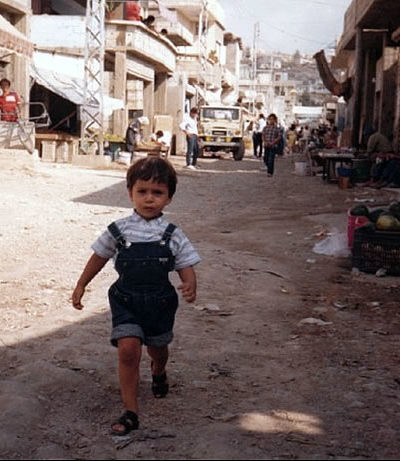
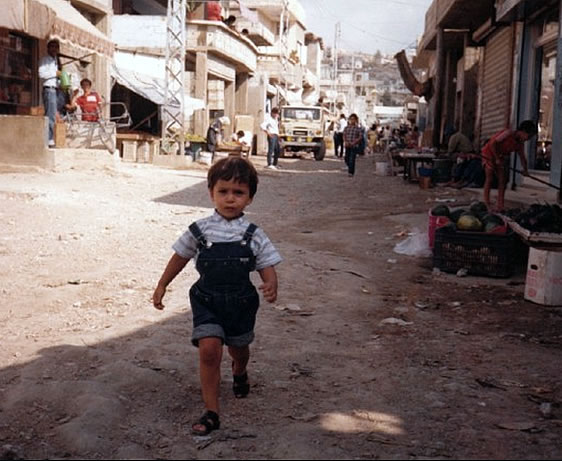
Image credit: 'A World Not Ours', 2014